Explore the top LMS Platforms to Use with detailed highlights on each. Find the right platform to use. Learn more!

In the rapidly evolving world of digital learning, Learning Management Systems (LMS) have become the backbone of education and training delivery. Whether you're an educational institution transitioning to hybrid learning, a corporate organization scaling workforce development, or an individual educator building a digital course business, selecting the right LMS can significantly influence learner outcomes and engagement.
An LMS is more than just a platform to host courses it’s a centralized hub for curriculum management, learner analytics, collaboration, certification, and content delivery. As the demand for flexible, scalable, and data-driven learning grows, choosing an LMS with the right blend of usability, features, and integration capabilities is critical.
In this article, we dive into the top 5 LMS platforms that stand out for their innovation, functionality, and versatility. We’ll explore their key features, ideal use cases, benefits, and how each platform supports diverse learning needs from schools and universities to businesses and independent creators.
Moodle is one of the oldest and most widely used LMS platforms in the world. As a free, open-source solution, it offers endless possibilities for customization, making it a go-to choice for schools, universities, NGOs, and even corporate trainers with in-house IT teams.
Pricing (MoodleCloud standard hosting plans)
Moodle provides unmatched flexibility and control. If you have the resources to manage hosting and customization, it's a powerhouse for academic and formal learning environments.
Explore Detailed Comparison of Top LMS Platforms
Canvas, developed by Instructure, is a cloud-native LMS designed with usability in mind. Popular among universities and colleges, it offers a clean interface, high-end integrations, and strong mobile support.
Pricing:
Canvas pricing is typically license-based and customized per institution. Costs can range from $50,000 to over $100,000/year, depending on the number of students, level of support, integrations (e.g., SIS), and service tiers.
Canvas delivers a smooth, modern learning experience with minimal friction. Its cloud infrastructure ensures high uptime and scalability, perfect for large-scale institutions.
TalentLMS is a cloud-based LMS built for businesses of all sizes, especially suited for onboarding, compliance, sales training, and continuous professional development. Its intuitive setup allows companies to launch courses in minutes.
Pricing:
According to eLearning Industry data (2025)
TalentLMS removes the friction from implementation. It’s perfect for fast-paced business environments that need measurable results and modern UX without the overhead of technical setup.
Thinkific is designed for entrepreneurs, coaches, and subject matter experts who want to create and sell online courses. It offers powerful tools for monetization, branding, and learner engagement—all with no coding required.
Thinkific empowers creators to turn knowledge into revenue. Its business-first model is ideal for individuals or teams building a scalable education business.
Google Classroom is part of the Google Workspace for Education suite and is widely used in K–12 environments. While it’s not as feature-rich as commercial LMS platforms, its seamless integration with Google's ecosystem makes it a great option for teachers and students.
Google Classroom is ideal for educators looking for simplicity and speed. It's especially useful in resource-constrained educational environments.
LMS Platform | Best For | Pricing Model | Entry‑Level Cost |
Moodle (Cloud) | Institutions needing customization | Annual fixed per-user tiers | Starter: $130/year (50 users) |
Canvas LMS | Higher education & large institutions | Custom license-based pricing | ~$50K–$100K+/year |
TalentLMS | Corporate training & SMEs | Subscription per active user bracket | $29/mo (Small plan) |
Thinkific | Course creators & solopreneurs | Monthly/annual tiers | $49/mo (Basic) |
Google Classroom | K‑12 schools & educators | Per‑student or per‑license model | Free / ~$3–5/student/year |
Choosing the right LMS can be the difference between a seamless learning experience and a frustrating one. Whether you're managing a university’s entire curriculum, training a remote workforce, or building a personal course brand, the LMS you choose should align with your audience, content strategy, and goals.
As continues to emphasize accessibility, learner engagement, and data-driven learning, investing in the right LMS is not just a tech decision it’s a strategic move toward better education and training outcomes.
Explore Detailed Comparison of Top LMS Platforms
Skilldeck replaces 10+ software tools with one integrated, automated platform.
Skilldeck is a fully automated, budget-friendly plug-and-play solution designed for training institutes. It offers every essential feature needed to run and scale a training business, helping organizations accelerate growth with minimal effort and cost.
at a Fraction of the Cost
If you're seeking powerful tech and marketing automation that delivers results, Skilldeck is your go-to solution. Specifically built for training institutes, it offers everything you need in one place — from lead generation to operations — driving growth efficiently and affordably.
...and much more, all designed to scale your business effortlessly.
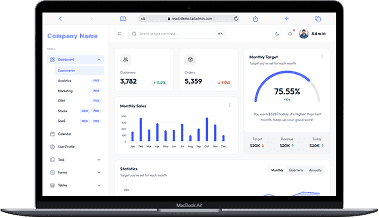
A perfect fit for someone who is getting started with a minimal budget, and looking for the premium features, UI/UX and scalability.
Training Institutes are finding Skilldeck.net quite useful, and are expediting their process & cutting down on the resources across all departments significantly. By reducing their expenses across all departments by at least 40%.
Skilldeck platform is developed by Manjunath Chowdary and team, Ex-Marketing head of Knowledgehut Upgrad, founder of KandraDigital Marketing solutions, and has built the tech and marketing strategies for various training companies.

Manjunath Chowdary
Founder & CEO, SkillDeck

Learn how to measure corporate training ROI by defining objectives, calculating total costs, tracking business outcomes, and evaluating the financial value generated by employee training.
Alex

Learn practical ways to improve student retention in training institutes through structured onboarding, engaging classes, regular progress monitoring, responsive support, and consistent communication.

Natasha
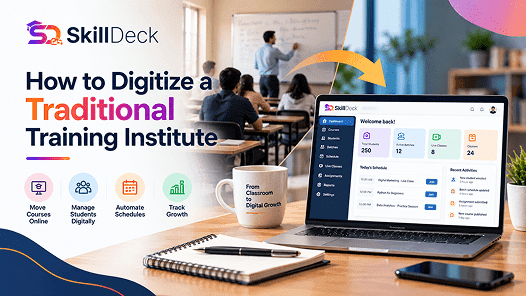
Learn how to digitize a traditional training institute using online learning, student management, automation, and digital marketing to simplify operations and support business growth.
Alex
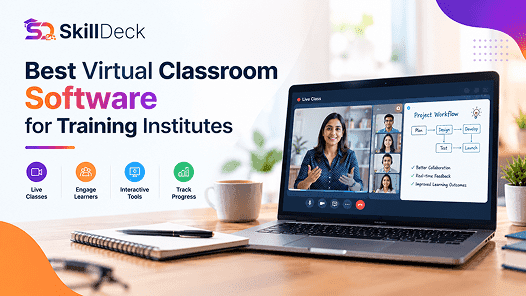
Discover how virtual classroom software helps training institutes manage live classes, trainers, learners, attendance, communication, and online learning from one platform.
Natasha
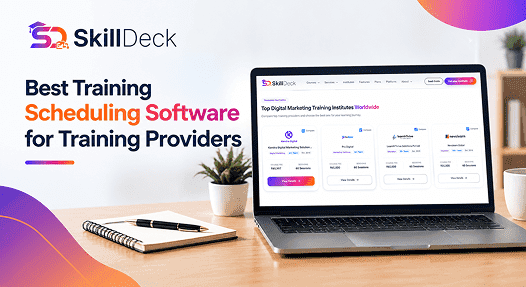
Discover how training scheduling software helps providers manage courses, batches, trainers, calendars, sessions, and learner schedules while reducing administrative work.
Alex
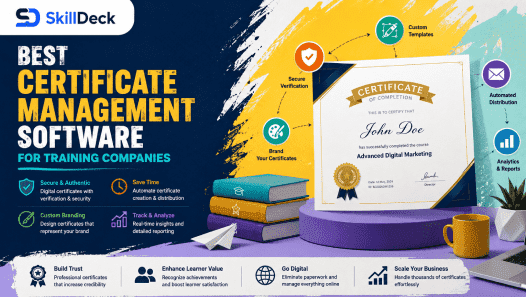
Discover how certificate management software helps training companies automate certificate creation, verification, tracking, and delivery while reducing administrative work and improving the learner experience.
Natasha