Explore ten technical and professional skills that can support career growth in 2027. Learn what each skill involves, where it can be applied, and how to start developing it for future job opportunities.

The skills employers look for continue to change as businesses adopt new technologies, improve digital operations, and respond to changing customer and workplace needs. In 2027, professionals will need a combination of technical knowledge, problem-solving abilities, and workplace skills to remain competitive.
Learning a new skill can help job seekers prepare for different roles, help employees take on additional responsibilities, and support professionals looking to move into growing fields. However, choosing what to learn requires more than following popular trends. The right skills should match your career interests and the type of work you want to pursue.
The World Economic Forum's Future of Jobs Report 2025 identifies AI and big data, cybersecurity, technological literacy, creative thinking, adaptability, and analytical thinking among the skills expected to grow in importance through 2030. These trends provide a useful basis for identifying skills worth developing for 2027.
Artificial Intelligence (AI) is being used across business functions such as marketing, customer support, software development, data processing, and business operations. Understanding how AI tools work and how to use them responsibly can help professionals improve their productivity and contribute to technology-driven projects.
Focus on learning:
Career opportunities: AI application specialist, AI operations associate, AI-enabled business analyst, and automation specialist.
Businesses need to reach customers through search engines, social platforms, websites, and digital advertising channels. Digital marketing skills help professionals plan campaigns, understand audience behaviour, and measure marketing performance.
A strong foundation in marketing combined with practical platform knowledge can support opportunities across agencies, businesses, and independent projects.
Focus on learning:
Career opportunities: Digital marketing executive, SEO specialist, performance marketer, social media manager, and marketing analyst.
Explore Digital Marketing Learning Opportunities →
Businesses use data to understand performance, identify patterns, and make informed decisions. Data analytics helps professionals collect, organise, interpret, and communicate information rather than relying only on assumptions.
Start with spreadsheets and basic data handling before moving into more advanced tools.
Focus on learning:
Career opportunities: Data analyst, business analyst, reporting analyst, and operations analyst.
Cloud computing allows organisations to use computing resources, storage, databases, and applications through cloud services. Companies use cloud platforms to support software development, data management, infrastructure, and business applications.
Understanding cloud fundamentals can help professionals work with modern IT environments and prepare for specialised cloud roles.
Focus on learning:
Career opportunities: Cloud support associate, cloud administrator, cloud engineer, and cloud operations specialist.
Programming helps professionals create applications, automate tasks, build websites, and solve technical problems. It remains useful for people interested in software development as well as professionals who want to understand how digital products work.
Choose a programming language based on the type of development you want to pursue.
Focus on learning:
Career opportunities: Software developer, web developer, Python developer, application developer, and automation developer.
As organisations depend on digital systems, protecting information, networks, and applications remains important. Cybersecurity skills help professionals identify risks, understand security practices, and support the protection of business systems.
You do not need to begin with advanced security engineering. Start with the fundamentals and develop technical knowledge according to your preferred specialisation.
Focus on learning:
Career opportunities: Cybersecurity analyst, security operations centre (SOC) analyst, information security associate, and network security specialist.
Analytical thinking involves examining information, identifying patterns, understanding problems, and making decisions based on evidence. Critical thinking helps professionals evaluate different viewpoints instead of accepting information without checking its accuracy.
These abilities are useful across technical, business, management, and customer-facing roles. The World Economic Forum identifies analytical thinking as a leading core skill for employers.
Focus on developing:
Career opportunities: Business analyst, research associate, operations analyst, project coordinator, and strategy associate.
Technical knowledge alone may not be enough to progress in a career. Professionals also need to explain ideas, coordinate with colleagues, manage responsibilities, and work towards shared objectives.
Communication and leadership skills become particularly important when moving into senior, managerial, or team-coordination roles.
Focus on learning:
Career opportunities: Team lead, project manager, operations manager, account manager, and department coordinator.
Creative thinking helps professionals develop new ideas, approach challenges from different perspectives, and improve existing processes. It is useful in both technical and non-technical work, particularly when a problem does not have one obvious solution.
Combine creativity with practical evaluation so that ideas can be turned into workable outcomes.
Focus on developing:
Career opportunities: Product associate, UX designer, content strategist, product marketing specialist, and innovation coordinator.
Tools, job responsibilities, and workplace expectations change over time. Professionals who can learn new systems, adjust to different responsibilities, and update their knowledge are better prepared to handle these changes.
Adaptability is not limited to technology roles. It is useful whenever employees need to work with new processes, teams, or business requirements.
Focus on developing:
Career opportunities: This skill supports progression across almost every field, including technology, business, operations, marketing, and management.
You do not need to learn all ten skills at once. Choose based on the type of role you want and the abilities employers expect in that field.
Match your career interest with the right skills:
| Career interest | Skills to prioritise |
|---|---|
| Artificial Intelligence | AI, generative AI, prompt writing |
| Digital Marketing | SEO, performance marketing, social media marketing |
| Data Analytics | Excel, SQL, Power BI, data visualisation |
| Cybersecurity | Network security, threat detection, security monitoring |
| Cloud Computing | Cloud platforms, cloud storage, cloud security |
| Software Development | Python, JavaScript, programming, debugging |
| Analytical and Critical Thinking | Problem analysis, logical reasoning, data interpretation |
| Communication and Leadership | Team coordination, presentation, decision-making |
| Creative Thinking | Idea generation, design thinking, process improvement |
| Adaptability | Continuous learning, flexibility, adapting to new technologies |
Before choosing a course, review job descriptions for the roles you are targeting. Identify the technical tools, practical abilities, and experience employers repeatedly mention. This helps you focus on skills that connect directly with your career plans.
Once you have selected a skill, follow a practical learning process.
1. Choose one primary skill: Start with the skill most relevant to your target role instead of trying to learn several unrelated subjects.
2. Understand the fundamentals: Learn the core concepts, terminology, and tools before moving to advanced topics.
3. Follow structured training: Use a course or learning programme that covers the required concepts in a logical order.
4. Practise with real tasks: Work on projects, exercises, case studies, or sample assignments related to the skill.
5. Build a portfolio: Keep examples of your work that demonstrate what you can do.
6. Review job requirements: Compare your current abilities with the skills listed in relevant job descriptions.
7. Continue improving: Update your knowledge as tools, technologies, and professional requirements change.
A certificate can demonstrate that you completed a learning programme, but practical ability and relevant work samples are important when showing employers what you can do.
The most valuable skills to learn in 2027 combine technical capabilities with human skills. AI, data analytics, cybersecurity, cloud computing, and programming can support technology-focused career paths, while digital marketing, analytical thinking, communication, creative problem-solving, and adaptability are useful across a wider range of roles.
There is no need to learn every skill on this list. Identify your preferred career direction, select the skills that match its requirements, and build practical experience through structured learning and projects. Consistent skill development can help you prepare for changing job expectations and make more informed career decisions.
YOUR NEXT STEP STARTS HERE
Looking to develop practical skills and expand your career knowledge? Explore Skilldeck courses to discover learning opportunities across different professional and technical areas. Choose a course that aligns with your interests and career goals.
Explore Skilldeck Courses →Skilldeck replaces 10+ software tools with one integrated, automated platform.
Skilldeck is a fully automated, budget-friendly plug-and-play solution designed for training institutes. It offers every essential feature needed to run and scale a training business, helping organizations accelerate growth with minimal effort and cost.
at a Fraction of the Cost
If you're seeking powerful tech and marketing automation that delivers results, Skilldeck is your go-to solution. Specifically built for training institutes, it offers everything you need in one place — from lead generation to operations — driving growth efficiently and affordably.
...and much more, all designed to scale your business effortlessly.
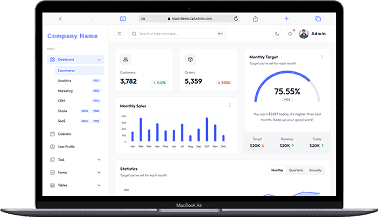
A perfect fit for someone who is getting started with a minimal budget, and looking for the premium features, UI/UX and scalability.
Training Institutes are finding Skilldeck.net quite useful, and are expediting their process & cutting down on the resources across all departments significantly. By reducing their expenses across all departments by at least 40%.
Skilldeck platform is developed by Manjunath Chowdary and team, Ex-Marketing head of Knowledgehut Upgrad, founder of KandraDigital Marketing solutions, and has built the tech and marketing strategies for various training companies.

Manjunath Chowdary
Founder & CEO, SkillDeck
No Blogs available for All