Discover the difference between PhonePe and Razorpay payment gateway charges. Compare UPI fees, transaction costs, features, and settlement times.

In today’s digital economy, businesses rely heavily on payment gateways to accept online payments smoothly and securely. Among the most popular platforms in India are PhonePe and Razorpay. Both offer robust solutions for startups, eCommerce websites, and enterprises looking to simplify online transactions. However, understanding PhonePe payment gateway charges vs Razorpay is essential before choosing the right platform for your business.
This guide provides a detailed Prompt Engineering Course comparision—wait correction: we must remove unrelated keywords. We'll keep relevant payment gateway keywords.
When comparing PhonePe vs Razorpay, both platforms provide multiple payment options such as UPI, debit cards, credit cards, wallets, and net banking. These payment gateway providers in India help businesses accept payments through websites, mobile apps, and payment links.
PhonePe Payment Gateway is well known for its strong UPI ecosystem and integration with the PhonePe app, which has millions of active users in India. Businesses that rely heavily on UPI payments often consider PhonePe because of its competitive pricing.
Razorpay, on the other hand, is considered one of the best payment gateway platforms for startups and developers. It provides advanced APIs, automation tools, subscription billing, and international payment support.
Understanding razorpay vs phonepe comparison helps businesses evaluate transaction costs, settlement times, and supported features.
When discussing PhonePe payment gateway charges, the pricing generally depends on the payment method used. PhonePe focuses strongly on UPI transactions, which can often be processed at minimal or zero cost depending on merchant agreements.
Typical PhonePe merchant charges include:
Many businesses prefer PhonePe because UPI-based transactions may have lower fees, making it an attractive option for small businesses and merchants focused on domestic payments.
Razorpay follows a transparent pay-as-you-go pricing structure. Businesses are charged only for successful transactions, with no setup or maintenance fees.
Typical Razorpay transaction fees include:
These Razorpay charges make it a flexible solution for startups, SaaS companies, and online platforms that need scalable payment infrastructure.
A clear PhonePe vs Razorpay comparison helps businesses determine which platform offers better value.
Feature | PhonePe | Razorpay |
|---|---|---|
Setup Fee | Free | Free |
Annual Maintenance | Free | Free |
UPI Charges | Often 0% | Around 2% |
Card Payments | ~1.8% – 2% | 2% + GST |
International Payments | Limited | Supported |
Settlement Time | Usually T+1 | Usually T+2 |
Developer Tools | Basic | Advanced APIs |
From a pricing perspective, PhonePe may be cheaper for UPI-heavy businesses, while Razorpay offers more advanced payment features.
Businesses should evaluate several factors beyond pricing when comparing payment gateway charges in India.
Razorpay supports international cards, EMI options, and subscriptions, making it ideal for global or SaaS businesses.
PhonePe is better suited for companies focused on UPI and domestic transactions.
Razorpay is widely recognized for its developer-friendly APIs and integration tools, which help businesses automate payments, subscriptions, and invoices.
PhonePe offers easier integration but fewer advanced automation features.
PhonePe usually offers faster settlement (T+1), while Razorpay settlements generally occur within T+2 days.
The answer depends on your business model.
Choose PhonePe if:
Choose Razorpay if:
Both PhonePe and Razorpay are among the best payment gateway providers in India. While PhonePe payment gateway charges may be lower for UPI-focused businesses, Razorpay charges offer access to a broader set of payment features and integrations.
When evaluating PhonePe vs Razorpay, businesses should consider transaction fees, payment methods, settlement time, and technical capabilities. By selecting the right payment gateway, companies can improve payment efficiency, reduce transaction costs, and deliver a better checkout experience for customers.
Skilldeck replaces 10+ software tools with one integrated, automated platform.
Skilldeck is a fully automated, budget-friendly plug-and-play solution designed for training institutes. It offers every essential feature needed to run and scale a training business, helping organizations accelerate growth with minimal effort and cost.
at a Fraction of the Cost
If you're seeking powerful tech and marketing automation that delivers results, Skilldeck is your go-to solution. Specifically built for training institutes, it offers everything you need in one place — from lead generation to operations — driving growth efficiently and affordably.
...and much more, all designed to scale your business effortlessly.
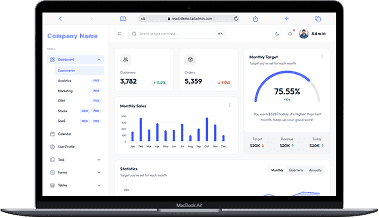
A perfect fit for someone who is getting started with a minimal budget, and looking for the premium features, UI/UX and scalability.
Training Institutes are finding Skilldeck.net quite useful, and are expediting their process & cutting down on the resources across all departments significantly. By reducing their expenses across all departments by at least 40%.
Skilldeck platform is developed by Manjunath Chowdary and team, Ex-Marketing head of Knowledgehut Upgrad, founder of KandraDigital Marketing solutions, and has built the tech and marketing strategies for various training companies.

Manjunath Chowdary
Founder & CEO, SkillDeck

Learn how to measure corporate training ROI by defining objectives, calculating total costs, tracking business outcomes, and evaluating the financial value generated by employee training.
Alex

Learn practical ways to improve student retention in training institutes through structured onboarding, engaging classes, regular progress monitoring, responsive support, and consistent communication.

Natasha

Learn how to digitize a traditional training institute using online learning, student management, automation, and digital marketing to simplify operations and support business growth.
Alex

Discover how virtual classroom software helps training institutes manage live classes, trainers, learners, attendance, communication, and online learning from one platform.
Natasha

Discover how training scheduling software helps providers manage courses, batches, trainers, calendars, sessions, and learner schedules while reducing administrative work.
Alex

Discover how certificate management software helps training companies automate certificate creation, verification, tracking, and delivery while reducing administrative work and improving the learner experience.
Natasha