
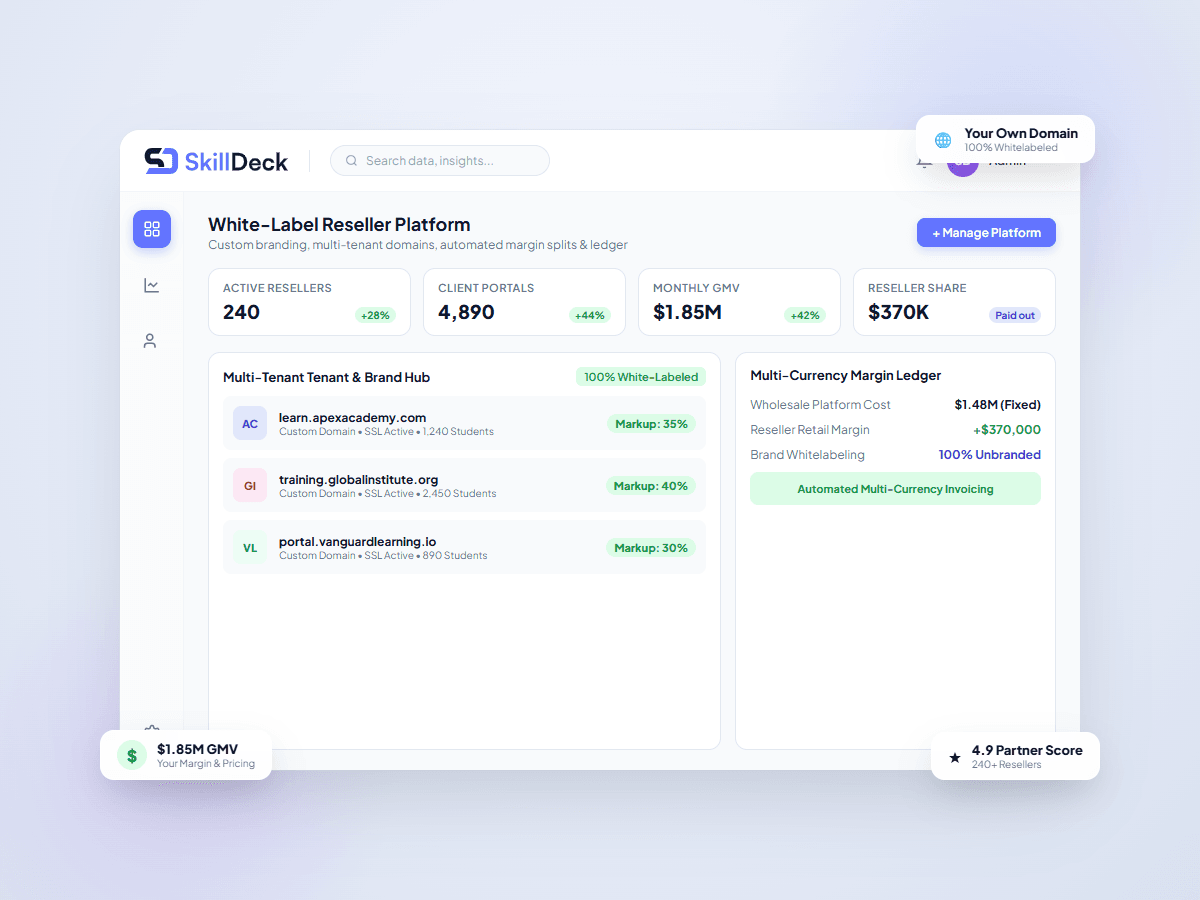
A training company's website and learning platform are often the first places where learners interact with the business. They may visit a course page, submit an enquiry, register for a program, log in to an LMS, watch learning content, download resources, or check their batch information. When the underlying hosting environment is slow, unreliable, or difficult to manage, even a well-designed training platform can deliver a poor experience. Web hosting for training companies provides the infrastructure needed to keep websites, LMS platforms, course portals, landing pages, learner resources, and related digital services accessible and responsive. Instead of treating hosting as simply a place to store website files, training businesses need an environment that can support changing traffic levels, learning content, user activity, security requirements, backups, and future expansion. For training institutes, academies, coaching businesses, EdTech companies, and professional learning providers, choosing suitable hosting can create a stronger foundation for both everyday operations and long-term digital growth.
Why Hosting Matters for a Training Business
A training website can have significantly different usage patterns from a simple informational business website. Traffic may increase when a new course is launched, registrations open, advertisements begin running, or an online class starts. At the same time, an LMS may have many learners accessing course materials, assessments, dashboards, and other resources. The hosting environment therefore needs to support more than basic website availability. Good hosting can help a training company: Keep its website and learning platform accessible Deliver pages and resources more consistently Support LMS-related workloads Protect website and learner-related data Maintain regular backups Handle increasing traffic and users Reduce the technical burden on internal teams Create a stronger foundation for future digital services The right infrastructure becomes particularly important when the training business depends heavily on online admissions, digital course delivery, or learner self-service.
Hosting Infrastructure Built Around Learning Operations
Training companies commonly operate several digital components at the same time. A website may introduce the organization and its courses, while an LMS handles learning delivery. Landing pages may support advertising campaigns, and forms may capture prospective learners. Instead of considering each component separately, hosting should provide a dependable environment for the broader digital ecosystem. An LMS-ready hosting setup can support websites and learning systems while providing the resources required for databases, media, applications, integrations, and user activity. This creates a more practical infrastructure foundation for businesses that want their website and learning operations to work together.
Performance That Supports Learner Experience
Website speed affects how easily visitors navigate a training company's digital presence. A prospective learner may move between course pages, registration forms, pricing information, schedules, and other resources before deciding whether to enquire or enroll. Slow-loading pages can interrupt that journey. Performance-focused hosting can provide the underlying resources required for smoother website operation. Depending on the platform and hosting configuration, this can include suitable processing capacity, memory, storage, caching capabilities, and optimized server environments. For an LMS, performance also matters when multiple users are accessing learning resources around the same time. For example, a training company conducting a popular online certification program may experience higher activity when learners log in to access lessons, assessments, or downloadable resources. Hosting infrastructure should be able to support these usage patterns rather than being designed only around the website's average traffic.
Security for Training Websites and Learning Platforms
Training businesses handle more than public website content. Their digital platforms may contain learner accounts, course information, application details, administrative data, and other business information. Security should therefore be part of the hosting decision from the beginning. A suitable hosting environment can contribute to a stronger security setup through measures such as: Secure server configurations Access controls SSL support Regular software and system updates Network-level protection Malware monitoring where supported Secure administrative access Data protection practices Backup and recovery mechanisms Hosting alone does not make an LMS or website completely secure. Application configuration, passwords, permissions, updates, integrations, and internal processes also matter. However, dependable infrastructure provides an important layer in the overall security strategy.
Automated Backups for Greater Operational Confidence
A training website can contain months or years of course information, pages, media, learner records, configurations, and business content. Losing important information because of an unexpected technical issue can create significant disruption. Regular backups provide a way to maintain recoverable copies of important website and platform data. For training companies, automated backups can help reduce dependence on someone remembering to create manual copies. A structured backup approach can cover important components of the digital environment according to the hosting and application configuration. Businesses should also understand how frequently backups are created, how long they are retained, where they are stored, and how restoration works before selecting a hosting solution. A backup that cannot be restored when needed does not provide the same operational value as a properly planned recovery process.
Scalable Hosting for Growing Training Businesses
A training company may begin with a relatively small website and a limited learner base. Over time, it may add new courses, instructors, batches, locations, programs, or online learning services. Hosting should not become a barrier to that growth. Scalable infrastructure allows businesses to increase available resources as their requirements change. This may involve additional storage, processing resources, memory, bandwidth capacity, or other infrastructure improvements depending on the hosting model. Consider a training company launching a new professional certification program. The company may promote the program through social media, search campaigns, webinars, and email marketing. Traffic can rise quickly during registration periods. A hosting environment designed with scalability in mind gives the business more flexibility to accommodate these changes.
Support for LMS and Course Platforms
An LMS may contain course structures, lessons, videos, assessments, learner accounts, certificates, progress records, and other learning components. The hosting environment must therefore be compatible with the technical requirements of the selected LMS. Before choosing hosting, training businesses should evaluate: LMS compatibility Server requirements Database requirements Storage capacity Performance requirements Supported technologies Integration compatibility Backup options Security features Resource scalability This is especially important when the training company uses a customized or integrated learning platform rather than a basic website.
Reliable Hosting for Different Training Models
Different training businesses have different infrastructure requirements.
Training Institutes
Training institutes may use their websites to publish programs, capture enquiries, display schedules, and provide learner access to digital resources. Reliable hosting supports these day-to-day activities.
Online Course Businesses
Businesses focused on online courses may depend heavily on their LMS and course portal. Hosting performance and scalability become more important as the learner base grows.
Corporate Training Providers
Corporate training companies may manage multiple programs for different organizations, requiring dependable access to learning portals, resources, assessments, and reports.
Coaching and Professional Training Businesses
Coaching companies and professional training providers may combine website-based lead generation with online learning. Their hosting environment needs to support both marketing and learning activities.
EdTech Companies
Growing EdTech businesses can have more demanding infrastructure requirements as they add users, courses, integrations, and digital services. Scalable hosting provides room for expansion.
Hosting for Websites, Landing Pages, and Course Portals
A training business rarely depends on a single webpage. Its digital environment may include: Main corporate website Course listing pages Individual course pages Landing pages Registration forms Blog and resource sections LMS portal Learner dashboard Instructor resources Webinar pages Downloadable learning materials Managing these components on suitable infrastructure can make the overall digital operation more dependable. Marketing teams can also create campaign-specific landing pages without treating every new page as a separate technical project.
Handling Traffic During Course Promotions
Training businesses often experience traffic spikes instead of perfectly consistent traffic throughout the year. Course launches, enrollment deadlines, promotional campaigns, webinars, examination registrations, and seasonal programs can all bring additional visitors. This makes capacity planning important. A hosting solution should be evaluated not only according to normal traffic but also according to expected peak usage. Businesses should consider what happens when many visitors arrive simultaneously and whether resources can be increased when required. Planning for peak activity can help prevent infrastructure limitations from affecting important enrollment campaigns.
Reducing Technical Complexity
Many training companies want to focus their internal resources on courses, learners, instructors, marketing, and business development rather than constantly managing server-related issues. A suitable hosting solution can simplify the infrastructure side of the operation. Instead of managing multiple disconnected hosting arrangements, businesses can work toward a more organized environment for their website, LMS, databases, backups, and related applications. This does not remove the need for technical management, but it can make the overall technology setup easier to understand and maintain.
What to Evaluate Before Choosing Web Hosting
Price should not be the only factor when selecting hosting for a training company. A practical evaluation should include:
1. Performance Capacity
Understand the available CPU, memory, storage, bandwidth, and other resources. Check whether they are suitable for the website and LMS workloads.
2. Scalability
Determine how easily resources can be increased when traffic, learners, or content volumes grow.
3. Backup Strategy
Check backup frequency, retention, restoration procedures, and coverage.
4. Security
Review the available security controls and understand what is managed by the hosting provider versus the business.
5. LMS Compatibility
Confirm that the hosting environment supports the technical requirements of the LMS and associated applications.
6. Reliability
Look at the infrastructure's reliability, monitoring, maintenance approach, and support arrangements.
7. Storage Requirements
Video lessons, documents, images, assessments, and other learning resources can consume substantial storage. Plan capacity according to current and future content needs.
8. Technical Support
When a hosting issue affects a website or learning platform, timely support can be important. Understand what type of technical assistance is included.
Web Hosting vs Basic Website Hosting for Training Businesses
Area Basic Website Hosting Training-Focused Hosting Primary focus General website operation Website and learning operations LMS readiness May require additional evaluation Designed around LMS requirements Scalability Often limited by the selected plan Resources can be planned for growth Backups May vary by provider Backup strategy is treated as an important requirement Learning content Basic website content Course and learning resources can be considered Traffic planning Primarily website traffic Website, campaigns, and learner activity Infrastructure planning General-purpose Better aligned with training workflows The key difference is not simply the hosting label. It is whether the infrastructure is suitable for the actual workload of the training business.
How Skilldeck Supports the Digital Foundation
Skilldeck is designed to help training businesses manage their broader digital operations through connected technology. For organizations running websites, learning programs, learner management, marketing activities, and training workflows, the underlying infrastructure needs to support those operations reliably. Web hosting can provide the technical foundation required for the digital environment, while Skilldeck can help bring important business functions together. Training companies can build a more connected setup around areas such as: Website and content management LMS operations Course management Learner management CRM workflows Lead management Marketing activities Training operations Automation Reporting This approach helps businesses think beyond hosting as a standalone technical purchase. The goal is to create a digital environment that can support how the training company actually operates.
When Should a Training Company Upgrade Its Hosting?
A hosting upgrade may become worth considering when a business starts experiencing performance issues, increasing traffic, storage limitations, resource constraints, or growing LMS usage. Other signals can include: Website performance becoming inconsistent Increasing numbers of active learners Larger course libraries More video and downloadable content Frequent traffic spikes Additional integrations Expansion into multiple programs or locations Greater dependence on online learning More demanding administrative requirements Businesses do not necessarily need the most expensive infrastructure from the beginning. The better approach is to select an environment that matches current requirements while providing a realistic path for expansion.
Building a Stable Infrastructure for Training Growth
A training company's digital platform is closely connected to its ability to attract, enroll, educate, and support learners. Website performance influences discovery and enquiries, while LMS reliability affects the learning experience. That makes hosting an operational decision rather than simply a technical expense. High-performance web hosting for training companies should provide a combination of performance, security, backups, LMS compatibility, reliability, and scalability. The right environment can help training businesses handle daily activity more confidently while preparing for periods of higher traffic and future expansion. As training companies move toward increasingly digital learning models, their infrastructure needs to grow alongside their courses, learners, teams, and business operations. A well-planned hosting foundation gives them the stability needed to build that digital environment without allowing infrastructure limitations to become a barrier to growth.
Final Thoughts
Web hosting for training companies should be selected around the complete learning and business experience rather than website storage alone. From course websites and landing pages to LMS platforms and learner portals, every component depends on reliable infrastructure. By prioritizing performance, security, automated backups, LMS readiness, resource capacity, and scalability, training businesses can create a stronger foundation for their digital operations. Skilldeck brings the broader training technology environment together, helping businesses build a more organized digital foundation for managing websites, learning, learners, leads, marketing, and training workflows as they grow.