Managing social media effectively requires more than creating good posts. Marketing teams need to know what content is going out, when it should be published, which campaign it belongs to, who is responsible for preparing it, and whether it has been reviewed. When this information is managed through spreadsheets, chat messages, scattered documents, and individual platform dashboards, it becomes difficult to maintain a clear picture of the entire content pipeline. A social media content calendar provides a visual and organized way to manage this process. It gives marketers a central place to plan upcoming posts, arrange content by date, coordinate campaigns, track progress, and prepare publications in advance. Instead of approaching social media one post at a time, teams can look at their content as an ongoing publishing plan.
What Is a Social Media Content Calendar?
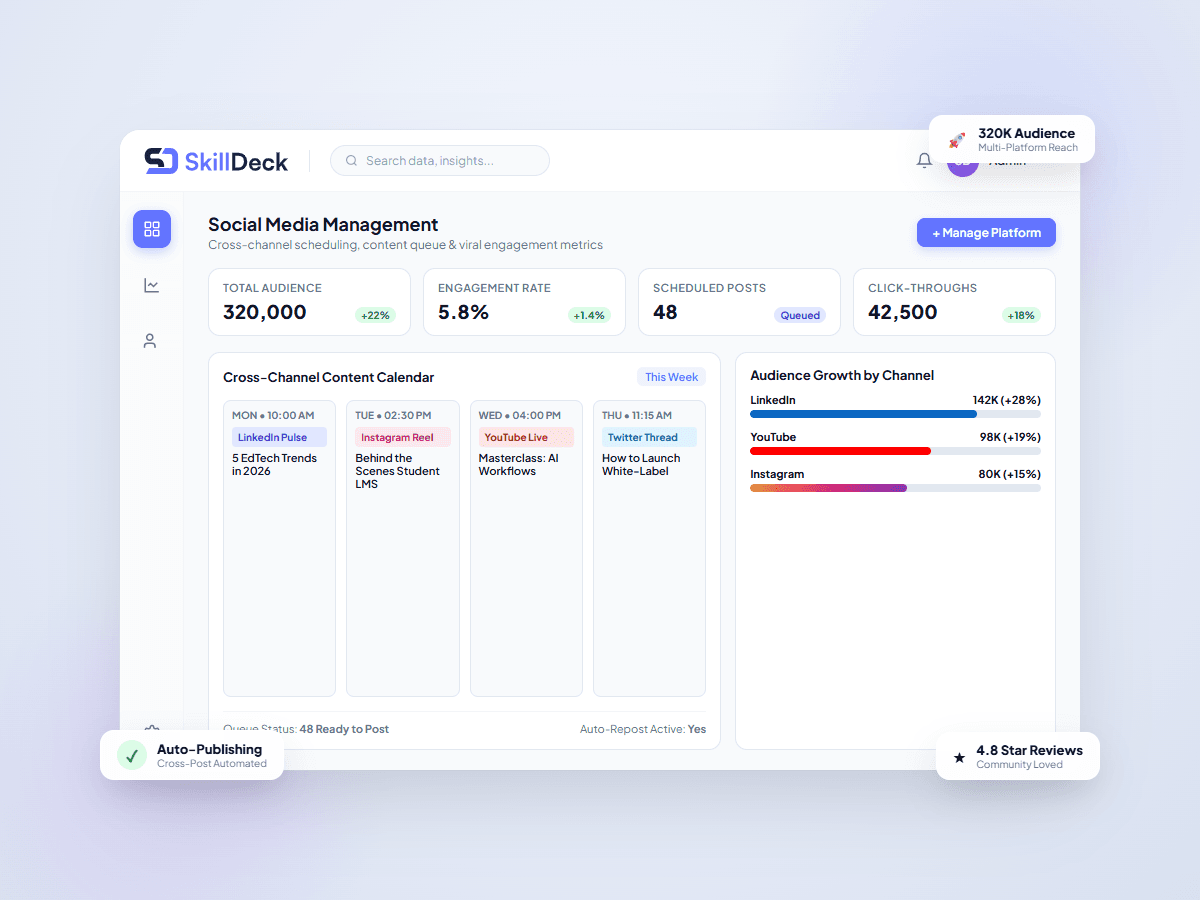
A social media content calendar is a centralized planning system that helps businesses organize their social media content according to publishing dates, campaigns, content categories, platforms, and workflow stages. The calendar provides a visual representation of planned content. Depending on the workflow, marketers can view content by day, week, month, campaign, or publishing status. For example, a marketing team may have the following content planned for a particular week:
- Educational content
- Product or service information
- Customer-focused content
- Industry updates
- Promotional posts
- Event announcements
Rather than maintaining these plans separately, the team can organize them within a shared content calendar. This makes it easier to understand the overall publishing rhythm and identify gaps before they become problems.
Why a Visual Content Calendar Matters
Social media planning becomes increasingly complicated as content volume grows. A business may publish several posts every week across multiple accounts while running different campaigns at the same time. Without a visual planning system, marketers can lose track of upcoming content or accidentally create too much content around one topic while neglecting another. A visual calendar provides an immediate overview of the publishing schedule. Marketers can quickly identify:
- What is scheduled for today
- What is planned for the rest of the week
- Which campaigns are currently active
- Which dates have limited content
- Which posts are waiting for approval
- Which content is still being prepared
- Which posts are ready to publish
This changes content planning from a list of individual tasks into a broader marketing workflow.
Plan Your Content Before the Publishing Rush
One of the biggest advantages of a content calendar is the ability to plan ahead. Instead of creating content only when a publishing date is approaching, marketers can build their content pipeline several days or weeks in advance. Planning ahead gives teams more time to:
- Develop stronger content ideas
- Prepare supporting creatives
- Review captions
- Coordinate campaigns
- Assign responsibilities
- Complete approvals
- Schedule publishing
This reduces the pressure of last-minute content production. A well-maintained calendar also allows marketing managers to review the overall direction of content before it reaches the audience.
Build a Weekly and Monthly Publishing View
Different planning periods are useful for different marketing decisions. A weekly view helps teams manage immediate publishing tasks. It shows what needs to be completed in the next few days and helps content creators prioritize their work. A monthly view provides a broader perspective. It can reveal important campaigns, product launches, events, seasonal promotions, and content gaps. For example, a training company planning its next month's marketing activities could map out:
- Course awareness content
- Upcoming batch announcements
- Webinar promotions
- Learning tips
- Industry insights
- Student-focused content
- Enrollment campaigns
With this larger view, the team can coordinate individual posts around broader business objectives.
Organize Content by Campaign
A content calendar becomes more useful when posts are connected to campaigns rather than treated as unrelated updates. A single campaign may require several pieces of content distributed over a period of time. For example, a new course campaign could include:
Awareness → Educational Content → Course Introduction → Feature Highlights → Reminder → Enrollment Message
Each post has a different purpose, but all contribute to the same campaign. Organizing posts around campaigns helps marketing teams understand the relationship between individual publications and larger objectives. It also makes campaign planning easier because teams can see whether the necessary content has been prepared for each stage.
Keep Different Content Types Balanced
A social media calendar should not become a collection of promotional posts. Audiences generally interact with different types of content for different reasons. Businesses can therefore use the calendar to maintain a more balanced content mix. Possible categories include:
- Educational posts
- Informational content
- Promotional messages
- Brand stories
- Industry insights
- Customer-focused content
- Event-related posts
- Engagement content
- Announcements
Categorizing content allows marketers to identify patterns in their publishing plan. For instance, if the calendar contains several promotional posts in a short period, the team can adjust the schedule before publication.
Coordinate Content Creators and Marketing Teams
Content production often involves several people. A writer may prepare the copy, a designer may create the visual, a marketing executive may schedule the post, and a manager may approve the final version. When these responsibilities are managed through conversations alone, it can be difficult to determine who is responsible for the next step. A centralized content calendar can make responsibilities clearer. Teams can associate content with workflow stages such as:
- Idea
- Drafting
- Design
- Review
- Approval
- Scheduled
- Published
This creates a clearer path from an initial content idea to the final publication.
Manage Approval Before Publishing
Not every social media post should be published immediately after it is created. Businesses may have internal review processes, especially when posts involve promotions, pricing, brand announcements, educational claims, or important company information. A content calendar can provide visibility into approval status. For example, a marketing manager can quickly identify which posts are approved and ready for scheduling and which ones still require changes. This reduces the risk of publishing unfinished or unapproved content. It also gives content teams a shared understanding of what needs attention before a campaign goes live.
Connect Content Ideas With Actual Publishing Dates
Marketing teams often have many ideas but struggle to convert those ideas into a consistent publishing schedule. A content calendar bridges that gap. Instead of maintaining an unstructured list of ideas, marketers can turn suitable ideas into planned content items and assign them publishing dates. This helps answer practical questions such as:
- When should this idea be published?
- Does it support an existing campaign?
- Is another similar post already scheduled?
- Does the content need a design?
- Who will prepare it?
- Does it require approval?
This approach ensures that ideas move through the content workflow instead of remaining unused in a document or notes application.
Prepare Content in Batches
Creating content individually every day can interrupt other marketing activities. Batch planning allows teams to work on several related pieces of content during dedicated planning sessions. For example, a team may prepare an entire week's educational posts together. Another session can focus on promotional content for an upcoming campaign. Once prepared, these posts can be placed into the content calendar and scheduled according to the publishing plan. Batch planning can make content production more predictable and reduce the need for daily social media preparation.
Prevent Content Gaps
One common problem in social media management is inconsistent publishing. A team may publish regularly for several days and then become inactive because upcoming content was not prepared in advance. A calendar makes gaps easier to identify. If there are several empty days during an important campaign period, marketers can address the gap before it affects the publishing schedule. This does not mean every day needs to contain a post. Instead, the calendar helps businesses make deliberate decisions about when and why they are publishing.
Manage Multiple Social Media Channels
Businesses with an active digital presence may manage content for multiple social media channels. Each channel may require different formats, messaging styles, or publishing schedules. A centralized content calendar can help teams organize channel-specific content without losing sight of the overall campaign. For example, a single campaign could contain different content variations for different audiences and channels while still being connected to the same marketing objective. This gives the team a broader campaign view while allowing individual posts to remain relevant to their intended audience.
Repurpose Content Without Losing Organization
Strong content can often be adapted into multiple formats. A detailed educational article could inspire several social posts. A webinar could produce announcement content, reminder posts, highlights, and follow-up material. Without a calendar, repurposed content can become difficult to track. Teams can organize the different versions within the same campaign or content theme and assign separate publishing dates. This helps businesses get more value from existing content while avoiding random or repetitive publishing.
Track Content Status at a Glance
A useful content calendar should provide more than dates. Marketing teams also need to understand the current status of each content item. Useful status categories can include:
- Content idea
- In progress
- Waiting for creative
- Under review
- Approved
- Scheduled
- Published
This makes it easier for managers to identify bottlenecks. If many posts are waiting for design, the team can address the design workload. If several posts are awaiting approval, the reviewer can prioritize them. The calendar therefore becomes a management tool rather than simply a publishing timetable.
Use a Content Calendar for Important Marketing Events
Certain business events require coordinated social media activity. These may include:
- Product launches
- Course launches
- Webinars
- Workshops
- Company announcements
- Seasonal promotions
- Industry events
- New service launches
A calendar allows the marketing team to work backward from the event date. Instead of publishing one announcement at the last moment, the team can prepare supporting content before, during, and after the event. This creates a more organized campaign journey.
Social Media Content Calendar for Training Businesses
Training institutes, academies, and professional learning companies can use a content calendar to coordinate their marketing activities around learner and business requirements. A typical calendar might include course awareness posts, learning tips, instructor introductions, student stories, upcoming batch announcements, webinar promotions, industry updates, and enrollment reminders. These content categories can be distributed throughout the month instead of being published randomly. For a training business, the calendar can also help connect social campaigns with enrollment periods. For example, awareness content can begin before a new batch opens, followed by educational content and course information, with reminder content closer to the enrollment deadline.
Benefits of a Social Media Content Calendar
Better Content Visibility
Teams can see upcoming content without searching through multiple documents or conversations.
More Organized Campaign Planning
Posts can be grouped according to campaigns, themes, or business objectives.
Improved Team Coordination
Everyone involved in content production can understand what needs to happen next.
Fewer Last-Minute Posts
Advance planning gives teams more time to prepare and review content.
Consistent Publishing
A planned calendar makes it easier to maintain a deliberate publishing rhythm.
Easier Content Management
Marketers can identify pending, approved, scheduled, and published content from a central workflow.
Better Use of Marketing Resources
Batch planning and campaign organization help teams spend their time more efficiently.
What to Look for in a Social Media Content Calendar Tool
Choosing a content calendar tool should depend on the complete workflow rather than the visual calendar alone. Businesses should consider whether the platform supports:
- Visual calendar views
- Post scheduling
- Campaign organization
- Content categorization
- Multiple account management
- Approval workflows
- Team collaboration
- Content status tracking
- Recurring content planning
- Publishing queues
- Performance tracking
- Role-based access
The platform should make content planning easier rather than adding another complicated layer to the marketing process.
Spreadsheet Planning vs Social Media Content Calendar
Area Spreadsheet-Based Planning Social Media Content Calendar Content view Rows and columns Visual publishing timeline Campaign organization Usually manual Organized within the content workflow Status tracking Requires manual updates Visible within the workflow Team coordination Separate communication often needed Centralized workflow Publishing schedule Manually maintained Connected with scheduling Content planning Static planning document Active content management process A spreadsheet can be useful for basic planning, but a dedicated content calendar becomes more valuable as publishing volume, campaigns, and team responsibilities increase.
How Skilldeck Supports Social Media Content Planning
Skilldeck helps businesses manage digital operations through a more connected platform rather than depending on disconnected tools for every activity. For social media teams, a structured content calendar can provide a central environment for organizing publishing plans, campaigns, content responsibilities, workflow stages, and upcoming activities. The objective is to make the content process easier to manage from the initial idea through planning and scheduled publishing. For training companies, institutes, academies, and other growing businesses, social media marketing can also work alongside broader digital operations. Marketing teams can operate within a connected business environment while other teams manage websites, leads, customer information, learning operations, and related workflows. This approach helps businesses reduce fragmented processes and create a more organized foundation for digital growth.
Turn Social Media Planning Into a Repeatable Process
A content calendar is most valuable when it becomes part of the team's regular working process. A practical workflow can look like:
Plan → Create → Review → Organize → Schedule → Publish → Analyze → Improve
Each stage contributes to the next. Planning determines what the business wants to communicate. Creation turns those ideas into content. Review ensures that the content is ready. Organization places it into the appropriate campaign and calendar position. Scheduling prepares it for publication. Performance analysis then provides information for future planning. This creates a continuous content cycle rather than a collection of unrelated social media tasks.
Final Thoughts
A social media content calendar gives businesses a clearer way to plan, organize, coordinate, and schedule their publishing activities. Instead of relying on scattered lists or last-minute decisions, marketing teams can visualize their content pipeline and manage campaigns through a structured workflow. For businesses managing regular publishing, multiple campaigns, or collaborative content teams, a centralized calendar can make social media operations more predictable and easier to scale. Skilldeck provides a broader technology environment where businesses can organize digital activities alongside their wider operational workflows. By bringing planning, automation, collaboration, and business processes closer together, teams can spend less time managing fragmented tasks and more time creating useful content that supports long-term growth.