Education businesses today interact with learners across many different stages, from discovering a course and requesting information to enrolling, participating in a program, and continuing their relationship with the platform. For EdTech companies, this journey can involve websites, mobile applications, digital campaigns, counsellors, support teams, admissions teams, and learning platforms.
As the number of learners and enquiries increases, managing these interactions across spreadsheets, email accounts, messaging platforms, and disconnected applications can become difficult. Teams may struggle to understand where a learner came from, what course they are interested in, which communication has already taken place, and what action should happen next.
This is where CRM for education and EdTech becomes valuable.
An education CRM can centralize prospect and learner information, organize enquiries, manage communication, support admissions, monitor engagement, and provide teams with a more complete view of the learner relationship.
For an EdTech business, CRM is not limited to sales. It can connect marketing, admissions, learner support, and retention activities so that different teams can work with consistent information.
In this guide, we explore what CRM for education and EdTech means, the key capabilities education businesses should consider, its benefits and limitations, how to choose the right solution, and how Skilldeck can support a more connected education-business ecosystem.
What Is CRM for Education / EdTech?
CRM for education is a customer relationship management system adapted for education companies, EdTech platforms, online learning businesses, academies, and training organizations.
It helps businesses organize interactions with prospective learners, enrolled students, parents, corporate clients, and other relevant contacts.
An education-focused CRM can support the learner relationship from initial awareness through enquiry, conversion, enrollment, engagement, and ongoing communication.
Common CRM functions include:
- Lead capture
- Learner profile management
- Enquiry management
- Admission tracking
- Communication management
- Lead segmentation
- Course-interest tracking
- Follow-up scheduling
- Campaign tracking
- Counsellor management
- Learner engagement
- Re-engagement
- Conversion reporting
- Customer support coordination
The exact functionality depends on the platform, but the central purpose is to give education businesses a structured way to manage relationships and interactions.
Why Do Education and EdTech Businesses Need CRM?
Education businesses can have significantly different customer journeys compared with conventional businesses.
A learner may discover an online course through an advertisement, visit the website several times, download course information, attend a webinar, speak with an advisor, compare programs, and finally enroll.
Another learner may register for a free program but not purchase a paid course immediately.
Without centralized information, it can be difficult for teams to understand these different journeys.
Disconnected processes can lead to:
- Leads being distributed across multiple systems
- Delayed responses to enquiries
- Inconsistent communication
- Repeated questions to learners
- Difficulty tracking admission progress
- Limited visibility into campaign performance
- Learners becoming inactive
- Poor coordination between teams
- Time-consuming reporting
A CRM can provide a central layer for managing these interactions and help education businesses create more consistent learner journeys.
Key Features of CRM for Education / EdTech
1. Lead and Enquiry Management
Education businesses may receive prospects from websites, paid advertising, social media, webinars, referrals, events, organic search, and partner channels.
A CRM can collect and organize these enquiries so that teams can identify new prospects and manage them systematically.
Instead of checking multiple sources individually, authorized users can work from a centralized lead database.
2. Learner Profile Management
An education CRM should provide a structured profile for each prospect or learner.
Information may include:
- Name and contact information
- Course interests
- Previous enquiries
- Communication history
- Lead source
- Enrollment information
- Learning preferences
- Interaction history
- Support requirements
A consolidated profile helps teams understand the relationship instead of treating every interaction as a new conversation.
3. Lead Segmentation
Not every prospect has the same requirements or level of interest.
An EdTech company may have learners interested in different subjects, price ranges, formats, certification programs, or learning durations.
CRM segmentation can help organizations group contacts according to relevant characteristics.
Segments can be based on:
- Course interest
- Learning format
- Career objective
- Engagement level
- Purchase stage
- Previous enrollment
- Geographic market
- Campaign source
This allows businesses to create more relevant communication and outreach.
4. Admission and Enrollment Tracking
For education businesses, converting an enquiry into an enrollment is an important part of the learner journey.
A CRM can help teams monitor prospects as they move through different stages.
A workflow could include:
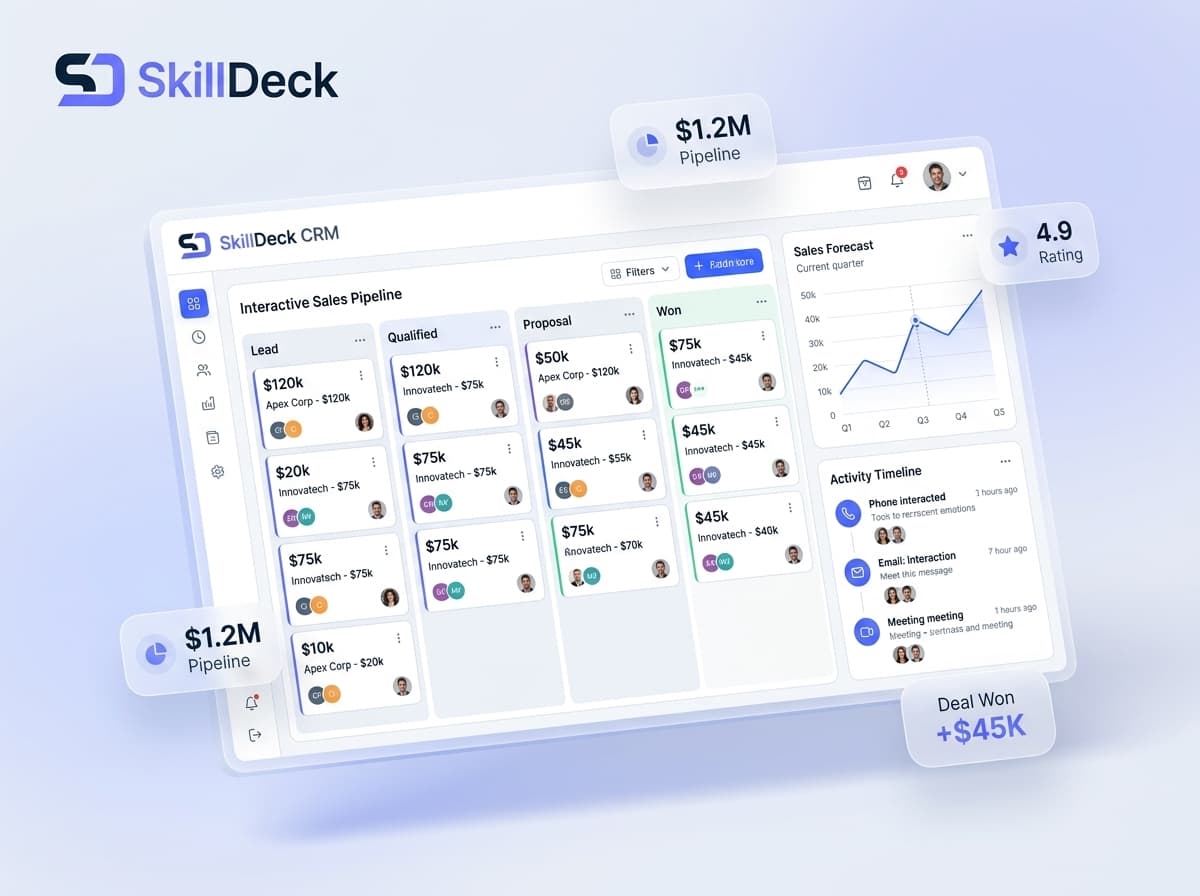
New Lead → Qualified → Information Shared → Counselling → Application → Payment → Enrolled
The stages can be customized according to the organization's admission model.
This gives management greater visibility into the movement of prospective learners.
5. Communication Management
Learners may interact with an education company through multiple channels.
A centralized CRM can help teams maintain context around previous interactions and communication.
Communication activities may include:
- Enquiry responses
- Course information
- Counselling communication
- Application updates
- Enrollment messages
- Support interactions
- Event invitations
- Program announcements
Maintaining interaction history can help reduce fragmented communication.
6. Automated Follow-Ups
Education decisions are often not immediate.
A prospect may need time to compare courses, discuss the purchase with family, arrange payment, or understand the program structure.
CRM workflows can help teams schedule appropriate follow-ups rather than relying entirely on manual reminders.
Automation can support routine activities while allowing sales and counselling teams to focus on more meaningful conversations.
7. Marketing Campaign Tracking
Marketing is an important growth channel for many EdTech businesses.
A CRM can connect leads with the campaigns or sources that generated them.
Businesses may track:
- Search campaigns
- Social media advertising
- Email campaigns
- Webinars
- Landing pages
- Referral programs
- Organic traffic
- Partner campaigns
This information can help teams understand which acquisition channels are bringing prospects into the business.
8. Course Interest Management
An education company may offer dozens or even hundreds of learning products.
A CRM can associate prospects with the programs they are interested in, allowing teams to understand demand across different offerings.
This information can also support relevant recommendations when a learner's original course preference changes.
9. Learner Engagement Tracking
CRM can extend beyond the initial admission process.
For EdTech companies, learner engagement can provide useful signals about the relationship between the learner and the platform.
Depending on the system and integrations available, businesses may be able to consider activities such as:
- Course interactions
- Event participation
- Communication responses
- Support requests
- Repeat enquiries
- Program interest
This can help teams identify learners who may require additional communication or support.
10. Re-Engagement and Retention Workflows
A learner who stops interacting with an education platform should not necessarily be treated as a lost customer.
CRM data can help organizations identify inactive contacts and create suitable re-engagement workflows.
For example, an EdTech company may reconnect with previous learners when a new course, advanced program, webinar, or relevant learning opportunity becomes available.
This creates opportunities to build longer-term learner relationships.
11. Team and Ownership Management
Education businesses may have marketing teams, sales teams, counsellors, admission executives, customer support representatives, and account managers.
A CRM can help assign contacts and activities to the appropriate team members.
Clear ownership can improve accountability and reduce confusion when multiple teams interact with the same learner.
12. Reporting and Analytics
Education businesses need visibility into both acquisition and conversion.
A CRM can provide reports that help management understand how prospects are moving through the business.
Useful reporting areas may include:
- New enquiries
- Lead sources
- Course demand
- Conversion rates
- Admission pipeline
- Team activity
- Campaign performance
- Follow-up status
- Re-engagement activity
These insights can support more informed business decisions.
Benefits of CRM for Education / EdTech
Creates a Unified Learner View
A centralized CRM can bring prospect and learner interactions into one environment, giving teams better context when communicating with customers.
Improves Response Management
When enquiries are organized and assigned properly, teams can respond more systematically and reduce the chances of promising leads being overlooked.
Supports Personalized Communication
Segmentation and learner profiles allow education businesses to make communication more relevant to individual interests and stages.
Strengthens Admission Operations
A structured pipeline gives admission teams greater visibility into prospects, applications, and enrollment progress.
Connects Marketing With Business Outcomes
Tracking lead sources and campaigns can help organizations understand what happens after marketing generates an enquiry.
Supports Learner Retention
CRM can help identify inactive learners and previous customers who may be interested in future programs or services.
Improves Team Coordination
When multiple departments work from shared information, communication between marketing, sales, admissions, and support teams can become more organized.
Challenges and Limitations
CRM can provide significant operational value, but education businesses should also consider the practical requirements involved.
Complex Learner Journeys
Education businesses may have different journeys for free users, paid learners, enterprise customers, parents, and returning students. Configuring the CRM to support these journeys may require planning.
Data Management
Learner information needs to remain accurate and up to date. Poor data quality can affect segmentation, reporting, and communication.
Team Adoption
Sales, support, and admission teams need to consistently use the CRM. A system cannot provide reliable visibility if important interactions continue to happen outside it.
Integration Requirements
EdTech businesses often use LMS platforms, websites, payment systems, marketing tools, communication services, and other applications. Connecting these systems may require technical configuration.
Implementation Effort
Setting up workflows, user roles, fields, pipelines, campaigns, and integrations can require an initial investment of time and resources.
Cost Considerations
Organizations should consider subscription charges along with implementation, customization, integrations, support, migration, and future expansion.
How to Choose the Best CRM for Education / EdTech
1. Map the Learner Journey
Understand how learners discover the business, interact with it, enquire, purchase, enroll, and continue using its services.
The CRM should support this actual journey rather than simply providing generic sales features.
2. Evaluate Data Management
Check whether the system can maintain useful learner profiles and organize information without creating unnecessary duplication.
3. Review Automation
Look at how the platform handles follow-ups, communication, assignments, reminders, and other repetitive workflows.
4. Check Integration Capabilities
Consider how the CRM will work with your website, LMS, payment system, marketing tools, communication channels, and other applications.
5. Examine Reporting
Management should be able to understand lead generation, learner acquisition, admission progress, campaign results, and team performance.
6. Consider Scalability
The system should accommodate increasing learners, courses, users, campaigns, and business operations.
7. Evaluate the Overall Platform
Rather than selecting CRM software in isolation, consider whether it can work alongside the other technology required to operate an education business.
Why Skilldeck Is a Strong Choice for Education and EdTech Businesses
CRM is only one component of an education business. Websites generate enquiries, marketing attracts prospects, CRM manages relationships, and LMS platforms support learning delivery.
Managing every function through unrelated systems can create unnecessary complexity.
Skilldeck takes an integrated approach by bringing together website, LMS, CRM, and marketing capabilities for training businesses. This can provide a more connected environment for organizations that want their business and learning operations to work together.
Connected Education Operations
Instead of keeping marketing, lead management, learning, and business activities in completely separate environments, an integrated platform can help organizations connect these areas.
This can bring together:
- Prospects
- Learners
- Courses
- Admissions
- CRM activities
- Learning operations
- Marketing
- Website management
- Business workflows
This broader view can help education businesses manage the learner relationship more consistently.
Automation Across Business Workflows
Education companies manage many repetitive processes, including lead handling, communication, follow-ups, learner management, and marketing activities.
Automation can reduce repetitive coordination and allow teams to focus more on learner interactions and business development.
CRM and LMS in One Ecosystem
For an EdTech business, the relationship with a learner does not end after an admission is completed.
Connecting CRM and LMS operations can create a more continuous environment from acquisition through learning.
Skilldeck's combination of CRM and LMS capabilities can support this broader approach to training-business management.
Marketing and CRM Connection
Marketing teams need to understand what happens after a lead is generated.
When CRM and marketing capabilities operate within a connected environment, businesses can create a clearer link between campaigns, enquiries, and learner acquisition.
Skilldeck combines marketing capabilities with CRM and website functionality, supporting a more integrated approach to education-business growth.
Scalable for Growing EdTech Businesses
An EdTech business can grow rapidly as it adds courses, instructors, learners, campaigns, and new markets.
Using separate applications for every new requirement can increase operational complexity.
A centralized platform can provide a more consistent technology foundation as the business expands.
Reduced Technical Burden
Running multiple independent systems can require businesses to manage integrations, updates, hosting, maintenance, vendors, and data movement.
Skilldeck promotes an all-in-one approach that combines key training-business functions and aims to reduce this technology burden.
Cost Efficiency
Using separate platforms for CRM, LMS, website management, marketing, and related business functions can create multiple subscriptions and integration expenses.
An integrated platform can potentially reduce this fragmentation.
Education businesses should still evaluate current pricing, functionality, plan limitations, support, and implementation requirements before choosing a platform.
Traditional Education CRM Management vs. Integrated CRM
Area | Disconnected Approach | Integrated CRM Approach |
|---|---|---|
Lead Information | Multiple systems | Centralized |
Learner Profiles | Scattered records | Unified profiles |
Communication | Separate channels | Organized history |
Admissions | Manual tracking | Structured pipeline |
Course Interest | Independent records | Connected data |
Marketing Sources | Limited visibility | Trackable |
Follow-Ups | Manual reminders | Workflow-based |
Learner Re-Engagement | Difficult | Structured |
Reporting | Manual compilation | Centralized insights |
Business Operations | Multiple tools | Connected ecosystem |
Final Verdict
The best CRM for education and EdTech businesses should do more than manage sales leads. It should help organizations understand and manage the complete learner relationship, from initial discovery and enquiry through admission, engagement, support, and future learning opportunities.
As education businesses grow, relying on spreadsheets, separate communication channels, and disconnected applications can make it increasingly difficult to maintain consistent learner information and coordinate different teams.
A dedicated education CRM can provide a structured environment for managing prospects, learner profiles, admissions, communication, marketing sources, follow-ups, engagement, and re-engagement.
For EdTech companies, the value becomes even greater when CRM connects with the learning and business ecosystem. Marketing generates interest, CRM manages relationships, admissions convert prospects, and LMS supports learning delivery. Keeping these functions connected can reduce unnecessary technology fragmentation.
Skilldeck offers an integrated approach by combining CRM, LMS, website, and marketing capabilities for training businesses. This can help education and EdTech companies manage their business and learning operations through a more centralized environment.
Ultimately, CRM for education is not simply about storing learner information. It is about creating a connected system for managing relationships throughout the learner lifecycle. With the right platform, education businesses can organize their teams more effectively, improve communication, understand their acquisition channels, and build stronger long-term learner relationships.