Running a training institute involves much more than delivering courses. Institutes continuously receive enquiries, speak with prospective students, explain programs, schedule counselling sessions, answer course-related questions, follow up with interested learners, and coordinate admissions. When these activities are handled across spreadsheets, phone records, messaging applications, and individual notes, it becomes difficult to maintain a complete view of each prospect.
This is where CRM for training institutes can make a practical difference.
A CRM gives training businesses a centralized environment for organizing prospective students and managing their interactions throughout the admission journey. Instead of treating every enquiry as an isolated contact, institutes can maintain information about the learner, their course interests, conversations, follow-up activities, counselling status, and admission progress in one place.
For a training institute, the value of CRM is not limited to storing contact information. It can help connect marketing enquiries with counselling teams, admissions, courses, batches, communication, and student onboarding.
What Is CRM for Training Institutes?
CRM for training institutes is a customer relationship management system designed to help education and training businesses manage prospective students and their interactions throughout the admission process.
A training institute may receive enquiries from several sources, including:
- Institute websites
- Landing pages
- Online advertisements
- Social media campaigns
- Marketplace listings
- Phone enquiries
- Walk-in enquiries
- Referral programs
- Events and seminars
- Existing student referrals
A CRM can bring these enquiries into a centralized system where teams can organize, qualify, assign, communicate with, and track prospects.
A typical training institute journey may look like:
Enquiry → Course Interest → Counselling → Follow-Up → Application → Admission → Batch Allocation → Student Onboarding
The exact process varies between institutes, but CRM software can help maintain continuity throughout these stages.
Why Training Institutes Need a CRM
Training institutes often deal with a high volume of enquiries, particularly when multiple courses, batches, locations, or learning formats are offered.
The challenge is not simply generating enquiries. The institute also needs to respond quickly, understand what each prospect is looking for, assign enquiries to the right counsellor, and continue communication until the learner makes a decision.
Without a structured system, several problems can appear.
An enquiry may remain unattended because it was received outside working hours. A counsellor may forget a scheduled callback. Another team member may contact the same prospect without knowing about an earlier conversation. Managers may also struggle to determine which courses are generating interest or where prospective students are dropping out of the admission process.
A CRM can provide a shared operational view of these activities.
Common problems with manual institute enquiry management include:
- Enquiries spread across multiple sources
- Delayed responses to prospective students
- Repeated or duplicate communication
- Incomplete prospect information
- Missed counselling appointments
- Untracked follow-ups
- Difficulty identifying serious prospects
- Limited visibility into admission progress
- Poor coordination between counsellors
- Difficulty measuring enquiry-to-admission performance
A centralized CRM can help training institutes create a more organized process without relying entirely on individual employees to remember every interaction.
Key Features of CRM for Training Institutes
1. Centralized Enquiry Management
A training institute may receive prospective students through several channels.
CRM software can bring these enquiries into a common environment so the admission team does not have to manage each source separately.
Each enquiry can be associated with information such as the student's name, contact details, preferred course, enquiry source, location, learning preference, and current status.
This creates a clearer starting point for the counselling process.
2. Course Interest Tracking
Prospective students may enquire about one specific program or compare several courses before making a decision.
A CRM can record the courses or programs a prospect is interested in.
For example, an institute offering multiple technology courses can identify whether a learner is interested in software testing, cloud computing, programming, data science, or another training program.
This information gives counsellors more context before beginning a conversation.
3. Prospect Profile Management
Every prospective student can have a centralized profile containing relevant information collected during interactions.
Depending on the institute's process, the profile may include:
- Contact information
- Educational background
- Course interest
- Preferred learning mode
- Counselling notes
- Enquiry source
- Communication history
- Follow-up activities
- Admission status
- Batch preference
Keeping this information together makes it easier for team members to understand the prospect without searching through multiple systems.
4. Lead Assignment to Counsellors
When an institute receives a large number of enquiries, distributing them manually can become difficult.
CRM software can help assign prospects to specific counsellors or admission team members.
Assignments can be organized according to factors such as course, location, workload, team responsibility, or other institute-defined rules.
This gives every enquiry clearer ownership.
5. Counselling Activity Management
Counselling is often an important part of the training institute admission process.
A CRM can help teams schedule counselling sessions, record discussion notes, monitor completed sessions, and track what should happen next.
Counsellors can therefore move beyond simply recording a phone number and maintain a more complete history of the student's interaction with the institute.
6. Follow-Up Scheduling
Prospective students may not enroll after the first conversation.
They may need time to discuss the course with family members, compare programs, arrange fees, understand schedules, or decide between different learning options.
CRM software can help counsellors schedule future follow-ups and maintain a clear list of pending activities.
This reduces dependence on personal reminders and makes ongoing prospect management more structured.
7. Enquiry Qualification
Not every enquiry has the same level of interest.
One prospect may be ready to join the next batch, while another may only be researching courses.
A CRM can allow institutes to classify enquiries according to their current level of interest or admission readiness.
Possible categories could include:
- New enquiry
- Interested
- Counselling required
- Follow-up required
- Application in progress
- Admission ready
- Enrolled
- Not interested
- Future prospect
These classifications help teams determine how to approach different prospects.
8. Communication History
A prospective student may communicate with the institute several times before joining.
The conversation could include questions about course content, fees, duration, trainers, schedules, projects, learning formats, or batch availability.
A CRM can maintain a history of interactions so counsellors can review previous conversations before continuing communication.
This can make the experience more consistent, especially when another team member takes over the enquiry.
9. Automated Communication
Training institutes frequently send routine messages to prospective students.
These may include:
- Counselling confirmations
- Course information
- Demo session reminders
- Follow-up messages
- Batch announcements
- Application reminders
- Admission communication
- Orientation information
Suitable communication workflows can be automated through a CRM, reducing repetitive administrative work.
Personal conversations can still remain with counsellors where human interaction is important.
10. Enquiry Source Tracking
Knowing where prospective students come from is valuable for both admissions and marketing teams.
CRM software can record enquiry sources such as advertisements, organic search, social media, referrals, websites, events, or other campaigns.
Over time, the institute can compare enquiry volume and admission outcomes across different sources.
This can provide useful context when deciding where marketing resources should be focused.
11. Batch and Schedule Information
Course selection and batch availability are often connected.
A prospect may be interested in a particular course but only available for weekend classes or a specific learning format.
CRM software can help maintain relevant course and batch information alongside the prospect's preferences.
This allows counsellors to have more informed discussions when recommending available options.
12. Admission Stage Tracking
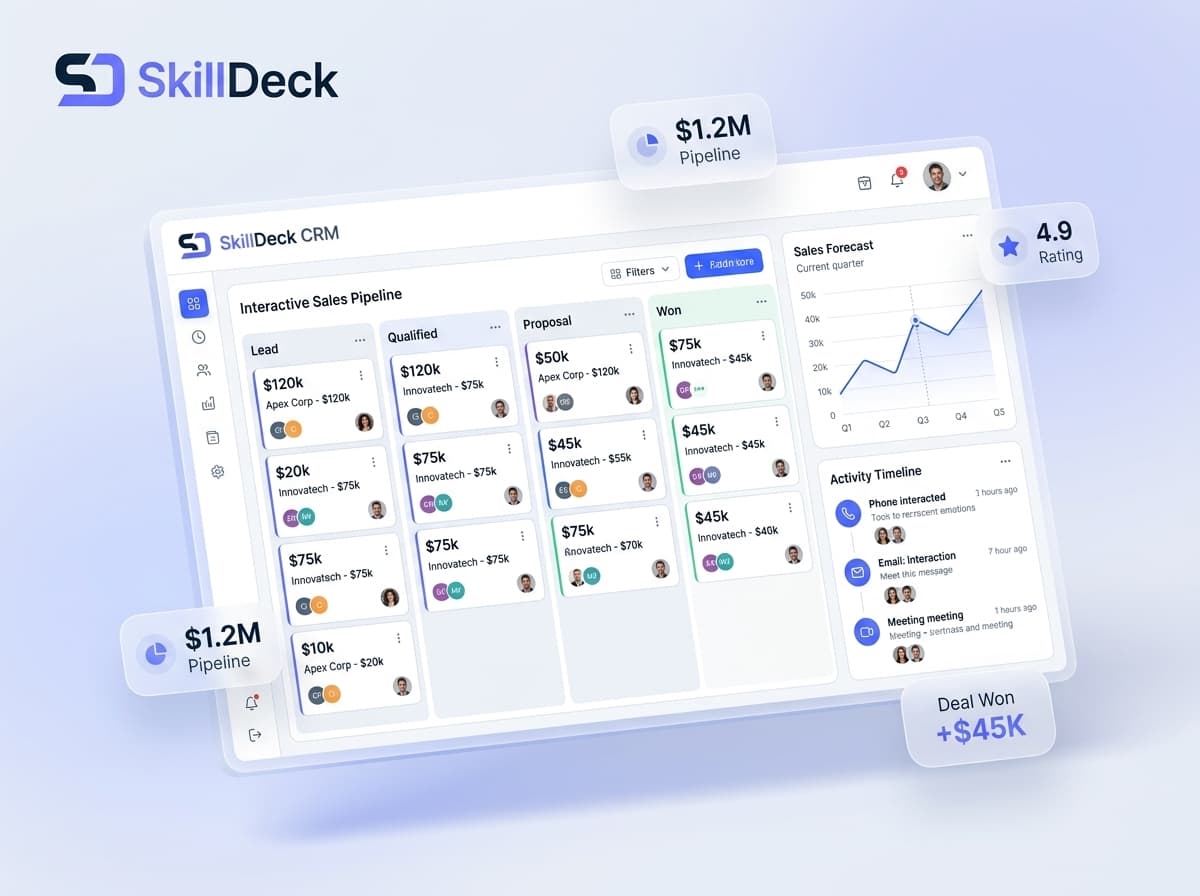
A CRM can provide a visual or structured view of where prospects are within the admission journey.
For example:
New Enquiry → Contacted → Counselling → Interested → Application → Payment Pending → Enrolled
This allows teams to identify prospects that require attention and understand how enquiries are progressing.
13. Document and Application Coordination
Some training programs may require application information or supporting documents before enrollment.
A CRM can help teams record the status of required information without forcing staff to maintain separate tracking sheets.
The system can indicate whether an application is incomplete, under review, ready for admission, or completed.
14. Payment Status Visibility
Admission and payment activities often occur close to one another.
A CRM can help teams coordinate payment-related status information with the enrollment process.
For example, the team may need to know whether a student's payment is pending, partially completed, confirmed, or awaiting verification.
This gives the admission team better visibility into the final stages of enrollment.
15. Re-Engagement of Older Enquiries
Not every prospective student enrolls immediately.
Some may postpone their plans because of work commitments, financial considerations, academic schedules, or personal circumstances.
A CRM allows institutes to retain these records rather than losing them after the initial enquiry.
Older prospects can later be segmented and contacted when a relevant course, batch, offer, or schedule becomes available.
16. Counsellor Performance Tracking
Managers need visibility into how admission teams are handling enquiries.
CRM reports can provide information about:
- Enquiries assigned
- Enquiries contacted
- Counselling sessions
- Pending follow-ups
- Conversion stages
- Admissions completed
- Inactive prospects
- Source-wise conversions
This helps managers understand workload and identify areas where the admission process may need improvement.
Benefits of CRM for Training Institutes
Better Enquiry Organization
A centralized CRM reduces the need to maintain prospect information across multiple spreadsheets and personal records.
Faster Response Management
When new enquiries and pending activities are visible to the right team members, counsellors can respond more systematically.
Improved Counselling Continuity
Previous conversations and counselling notes give team members better context when communicating with prospective students.
Fewer Missed Follow-Ups
Scheduled activities and reminders help counsellors keep track of prospects who need additional communication.
Clearer Admission Visibility
Managers can understand how many prospects are at different stages of the admission journey.
Better Marketing Decisions
Enquiry-source information can help institutes understand which channels are generating prospects and which are contributing to admissions.
More Effective Team Coordination
Shared prospect records make it easier for admission, counselling, marketing, and management teams to work with common information.
Stronger Prospect Experience
When an institute remembers previous discussions, course interests, requirements, and preferred schedules, prospective students can receive more relevant communication.
Challenges When Implementing CRM in Training Institutes
CRM software can improve institute operations, but the platform itself does not automatically solve every process problem.
Inconsistent Data Entry
If counsellors do not update enquiry details, follow-up outcomes, or admission stages, the CRM may not reflect the actual status of a prospect.
Poor Process Definition
An institute should define its admission journey before configuring CRM workflows. Otherwise, teams may end up using inconsistent stages.
Too Many Manual Fields
If counsellors have to enter excessive information for every interaction, they may avoid updating the system regularly.
Unnecessary Automation
Not every student interaction should be automated. Course counselling and important admission discussions often require personal communication.
Staff Adoption
The CRM needs to fit the daily working style of counsellors and administrators. Training and clear internal processes are important for successful adoption.
Integration Complexity
Institutes may already use websites, advertising platforms, communication tools, payment systems, LMS platforms, and other applications. Connecting these systems may require additional configuration.
How to Choose CRM for a Training Institute
Start With Your Enquiry Journey
Map the actual process from the moment a prospect contacts the institute until enrollment.
Identify who receives the enquiry, who contacts the prospect, when counselling occurs, how follow-ups are handled, and how admission is confirmed.
Check Multi-Source Enquiry Capture
The CRM should support the channels through which your institute actually receives enquiries.
This avoids creating another disconnected system for every marketing source.
Evaluate Course and Batch Management
If your institute offers multiple programs and schedules, make sure the CRM can connect prospect interests with relevant course and batch information.
Look at Counsellor Workflows
Review how easily counsellors can view assigned prospects, schedule activities, record conversations, and update enquiry stages.
Examine Communication Capabilities
Consider whether the system supports the communication channels and message workflows your institute regularly uses.
Review Reporting
Reports should help management understand enquiry volume, counsellor activity, course interest, admission progress, and conversion patterns.
Consider Integration
Think about how the CRM will work with your website, marketing activities, LMS, payment processes, communication tools, and other operational systems.
Plan for Growth
The platform should remain practical as your institute adds more courses, trainers, counsellors, batches, locations, and students.
Why Skilldeck Can Be a Strong Choice for Training Institutes
A training institute's CRM requirements are closely connected with the rest of its business operations. Enquiries often begin through the institute website or marketing campaigns, move into counselling and admissions, and eventually become enrolled learners.
Managing every stage through unrelated systems can create unnecessary technology and coordination work.
Skilldeck takes a broader approach by bringing CRM, website, marketing, LMS, and other training-business capabilities together within one platform environment.
Connecting Enquiries With the Student Journey
A prospect should not become a disconnected record after enrollment.
When CRM and learning operations are connected, the transition from enquiry and admission to learner management can be more organized.
This can help training businesses maintain continuity between acquisition, enrollment, and learning operations.
Supporting Training-Business Workflows
A training institute may need to manage websites, enquiries, admissions, courses, batches, learners, communication, and learning activities at the same time.
An integrated platform can reduce the need to coordinate multiple independent tools for these functions.
Connecting Marketing and CRM
Marketing generates interest, while the CRM helps teams manage what happens after an enquiry is received.
When these activities are connected, institutes can gain better visibility into the journey from marketing source to prospective student and eventually to enrollment.
Reducing Administrative Work
CRM automation can handle suitable repetitive activities such as reminders, routine communication, assignments, and workflow updates.
This allows institute teams to spend more time on counselling and student-facing activities.
Supporting Multiple Teams
As training businesses grow, marketing, counselling, admissions, academic, and management teams may all interact with the same student journey.
A centralized environment can provide these teams with access to relevant information while helping maintain clearer ownership and workflow visibility.
Reducing Technology Complexity
Using separate applications for website management, CRM, LMS, marketing, and other business functions can increase the effort required to maintain and connect them.
Skilldeck's broader platform approach is designed to bring these capabilities into a more connected environment, reducing the technology burden for training businesses.
Manual Institute Management vs CRM-Based Management
Area | Manual Institute Management | CRM-Based Management |
|---|---|---|
Enquiry Records | Maintained across separate sources | Centralized prospect records |
Counsellor Assignment | Often handled manually | Structured assignment |
Course Interest | Recorded in notes or sheets | Connected to prospect profile |
Follow-Ups | Personal reminders and spreadsheets | Scheduled CRM activities |
Counselling History | May be scattered | Available with prospect record |
Admission Stages | Manually monitored | Structured pipeline |
Enquiry Sources | Difficult to compare | Source information can be tracked |
Team Coordination | Depends on individual updates | Shared information environment |
Re-Engagement | Older enquiries can be overlooked | Previous prospects can be segmented |
Reporting | Manual compilation | Centralized activity and admission reports |
Final Verdict
CRM for training institutes can help transform the way an institute manages prospective students, counselling activities, admissions, and communication.
The objective is not simply to store a larger list of enquiries. A useful CRM should help the institute understand who the prospect is, what course they are interested in, what has already been discussed, what action is pending, and where they are in the admission journey.
For training institutes handling multiple courses, batches, counsellors, and enquiry sources, this visibility can become increasingly important as operations grow.
The right CRM should support centralized enquiry management, course interest tracking, counsellor assignment, counselling activities, follow-ups, communication history, admission stages, source tracking, reporting, and integrations with other institute operations.
Training businesses should also consider what happens after a prospect becomes a student. If CRM, website, marketing, enrollment, and learning operations remain completely disconnected, teams may continue facing coordination challenges even after adopting CRM software.
This is where an integrated platform approach can provide additional value.
Skilldeck brings together CRM, website, marketing, LMS, and other capabilities designed around training-business operations, helping institutes create a more connected environment from initial enquiry through enrollment and learning.
Ultimately, a CRM should make the institute's admission process easier to manage—not add another layer of complexity. When the system fits the institute's actual workflow and teams consistently use it, it can provide a clearer view of prospects, better coordination between teams, and a more organized path from first enquiry to enrolled student.