Learn how modern hardware inventory management reduces IT downtime, boosts infrastructure efficiency, prevents asset losses, and strengthens compliance. Learn key benefits, best practices.

In today’s technology-driven business environment, hardware assets form the backbone of every organization’s operations. From servers and laptops to routers, scanners, and printers, hardware equipment powers workflows, communication, and data management across departments. Yet, as IT ecosystems grow in size and complexity, managing these assets effectively becomes a major challenge.
That’s where hardware inventory management steps in a structured approach to tracking, auditing, and optimizing every physical asset within an enterprise. Effective hardware inventory management not only enhances operational efficiency but also plays a critical role in ensuring compliance, reducing costs, and supporting business continuity.
Hardware inventory management is the systematic process of maintaining a detailed record of all physical technology assets owned by a company. This includes everything from workstations and mobile devices to networking hardware, servers, and storage systems.
The goal is simple to ensure that every device is accounted for, properly utilized, and maintained throughout its lifecycle. However, achieving this goal requires more than just spreadsheets or periodic audits. It demands structured processes, accurate data collection, and the integration of digital tools that deliver real-time visibility across the IT landscape.
A proven resource like the AssetCues Hardware Inventory Management Guide provides step-by-step insights into best practices for achieving accuracy, automation, and transparency in managing hardware assets.
Many organizations underestimate the importance of maintaining an updated hardware inventory until inefficiencies or compliance issues surface. Without proper inventory tracking, IT departments often struggle with:
In contrast, a well-structured hardware inventory system allows businesses to monitor performance, allocate assets efficiently, and make data-driven decisions. It ensures that IT investments are optimized and that employees have access to the right tools to perform at their best.
The efficiency of an organization’s IT infrastructure depends heavily on the reliability of its hardware. When assets are properly tracked and maintained, downtime is minimized, costs are reduced, and the entire system operates more smoothly.
Accurate hardware data also enables IT teams to plan for upgrades, replacements, and capacity expansion. It’s easier to spot patterns, such as which equipment fails frequently or which devices are underutilized. By integrating inventory management into IT planning, companies gain control over their hardware ecosystem ensuring performance, security, and scalability.
Centralized tracking ensures that all hardware, whether on-site or remote, is visible at a glance. This prevents asset misplacement and streamlines audits.
Knowing which devices are used and which sit idle helps reallocate resources efficiently, reducing waste and unnecessary spending.
Accurate inventory data prevents over-purchasing, improves maintenance scheduling, and extends asset lifespans all leading to financial savings.
Organizations can easily adhere to regulatory requirements and internal audit processes with complete, up-to-date records.
Untracked or outdated devices often pose cybersecurity risks. Regular inventory updates ensure such vulnerabilities are identified and mitigated promptly.
Traditional asset tracking methods such as manual logs or spreadsheets are no longer efficient for large-scale organizations. Today, businesses use automated hardware inventory systems that leverage barcodes, RFID tags, and IoT-enabled devices to capture real-time data.
Automation eliminates human errors and provides continuous insights into hardware location, usage, and health. Integration with IT service management (ITSM) tools ensures that incidents and maintenance tasks are automatically linked to the relevant devices.
Many companies also invest in personalised web development solutions to build custom dashboards and web-based applications for tracking and managing their hardware assets. These solutions allow teams to access data securely, generate reports instantly, and monitor asset performance remotely empowering organizations to work smarter and more efficiently.
Consistency and standardization are crucial for long-term inventory management success. Businesses should establish frameworks that define how assets are tagged, tracked, and updated.
Following structured approaches, such as the AssetCues Hardware Inventory Management Guide, ensures accuracy at every stage from asset acquisition to decommissioning. This includes:
Implementing these practices eliminates guesswork and strengthens overall IT governance.
Inaccurate or incomplete hardware records can pose significant security and compliance risks. Devices that are not properly tracked can retain sensitive data even after being reassigned, lost, or decommissioned.
A robust hardware inventory management system ensures that every device’s lifecycle from deployment to disposal is monitored and documented. This is essential for adhering to standards like ISO 27001, GDPR, and SOX.
Moreover, accurate asset tracking helps IT teams enforce patch management policies, ensuring that all active devices are updated with the latest security configurations.
Hardware inventory management directly supports IT operations by providing a single source of truth for all equipment-related information.
For example:
By maintaining comprehensive hardware records, organizations minimize downtime and extend the lifespan of their IT infrastructure.
As businesses scale, their IT infrastructure becomes increasingly complex. Managing thousands of devices across multiple locations requires scalable and adaptable inventory systems.
Custom-built software often designed by experts offering personalised web development solutions enables organizations to customize their asset management platforms according to their evolving needs.
Furthermore, a strong digital ecosystem is essential for brand visibility and market competitiveness. Partnering with the Best Digital Marketing Services Provider helps organizations showcase their technological maturity, attract clients, and communicate their operational efficiency effectively in the digital space.
The future of hardware inventory management lies in AI, predictive analytics, and cloud integration.
AI-powered tools can automatically detect anomalies in hardware usage, forecast upgrade requirements, and suggest maintenance schedules. Cloud-based platforms ensure that asset data is accessible anytime, anywhere, while integration with IoT devices provides real-time status updates.
As businesses move toward hybrid and remote work models, having centralized visibility of all hardware assets across both on-premise and offsite environments becomes critical.
Organizations that adopt modern inventory management frameworks like the AssetCues Hardware Inventory Management Guide are better equipped to adapt to these evolving technological demands.
Efficient hardware inventory management isn’t just about keeping count it’s about driving strategic efficiency across the entire IT ecosystem. From reducing costs and improving compliance to enhancing security and sustainability, it plays a vital role in every organization’s success.
By leveraging advanced digital tools, integrating automation, and following structured frameworks such as the AssetCues Hardware Inventory Management Guide, businesses can ensure long-term operational excellence.
In an era where technology drives every aspect of business, managing hardware assets efficiently isn’t just a best practice it’s a competitive advantage.
Skilldeck replaces 10+ software tools with one integrated, automated platform.
Skilldeck is a fully automated, budget-friendly plug-and-play solution designed for training institutes. It offers every essential feature needed to run and scale a training business, helping organizations accelerate growth with minimal effort and cost.
at a Fraction of the Cost
If you're seeking powerful tech and marketing automation that delivers results, Skilldeck is your go-to solution. Specifically built for training institutes, it offers everything you need in one place — from lead generation to operations — driving growth efficiently and affordably.
...and much more, all designed to scale your business effortlessly.
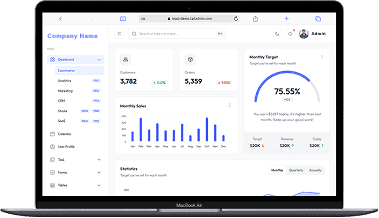
A perfect fit for someone who is getting started with a minimal budget, and looking for the premium features, UI/UX and scalability.
Training Institutes are finding Skilldeck.net quite useful, and are expediting their process & cutting down on the resources across all departments significantly. By reducing their expenses across all departments by at least 40%.
Skilldeck platform is developed by Manjunath Chowdary and team, Ex-Marketing head of Knowledgehut Upgrad, founder of KandraDigital Marketing solutions, and has built the tech and marketing strategies for various training companies.

Manjunath Chowdary
Founder & CEO, SkillDeck

Learn how to measure corporate training ROI by defining objectives, calculating total costs, tracking business outcomes, and evaluating the financial value generated by employee training.
Alex

Learn practical ways to improve student retention in training institutes through structured onboarding, engaging classes, regular progress monitoring, responsive support, and consistent communication.

Natasha
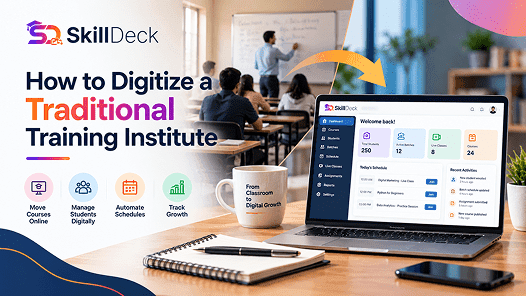
Learn how to digitize a traditional training institute using online learning, student management, automation, and digital marketing to simplify operations and support business growth.
Alex
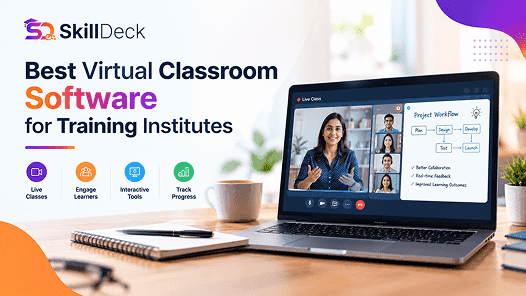
Discover how virtual classroom software helps training institutes manage live classes, trainers, learners, attendance, communication, and online learning from one platform.
Natasha
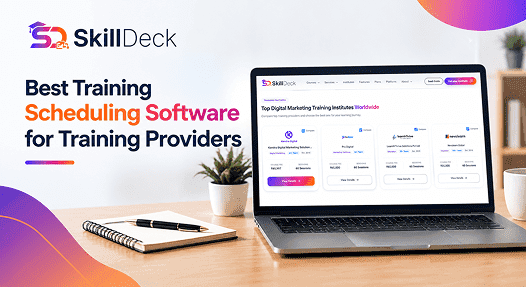
Discover how training scheduling software helps providers manage courses, batches, trainers, calendars, sessions, and learner schedules while reducing administrative work.
Alex
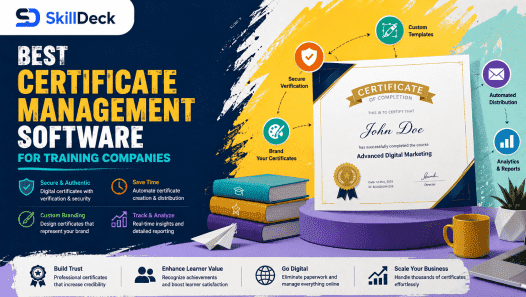
Discover how certificate management software helps training companies automate certificate creation, verification, tracking, and delivery while reducing administrative work and improving the learner experience.
Natasha