Learn practical ways to improve student retention in training institutes through structured onboarding, engaging classes, regular progress monitoring, responsive support, and consistent communication.

Student retention is an important measure of a training institute's ability to help learners continue and complete their courses. When students discontinue training before completion, they may miss their learning goals, while institutes may face lower completion rates, weaker referrals, and additional pressure to attract new admissions.
Students leave courses for different reasons. They may struggle with difficult topics, lose interest, find the schedule inconvenient, receive insufficient support, or feel that the course does not meet their expectations. Improving retention requires institutes to identify these problems early and respond before students decide to leave.
The most effective approach combines good teaching, clear communication, regular progress monitoring, flexible support, and a learning experience that keeps students involved throughout the course.
Before introducing retention strategies, an institute needs to understand why learners discontinue their courses. Without this information, it is difficult to address the actual causes.
Unclear course expectations: Students discover that the course differs from what they expected during admission.
Difficulty understanding lessons: Learners fall behind when they cannot follow the teaching pace.
Low engagement: Classes become repetitive or provide limited opportunities for participation.
Scheduling conflicts: Work, college, family responsibilities, or inconvenient class timings affect attendance.
Insufficient support: Students do not know whom to approach when they face academic or administrative problems.
Limited visible progress: Learners lose motivation when they cannot see how much they have improved.
Financial or personal difficulties: Unexpected circumstances may prevent students from continuing.
Use short surveys, student conversations, withdrawal records, and trainer feedback to identify recurring issues. When a student leaves, ask for the reason respectfully and use the response to improve future courses.
Retention starts before the first class. Students are more likely to continue when they understand what they are enrolling in and what will be expected of them.
Course objectives and learning outcomes
Topics and modules covered
Course duration and class schedule
Required prior knowledge
Practical assignments and assessments
Attendance and completion requirements
Support available when students need help
Avoid promising outcomes that the institute cannot guarantee. For example, do not imply that completing a course automatically guarantees a job or certification unless the specific outcome is genuinely assured.
When students have realistic expectations, they can make better enrollment decisions and are less likely to feel misled after classes begin.
The first few days of a course can influence whether students feel confident about continuing. A confusing start, missing information, or difficulty accessing learning materials can create unnecessary frustration.
A welcome message with essential course information.
Access to the learning platform and course materials.
An introduction to the trainer and support contact.
A clear class schedule and assessment plan.
Guidance on assignments, communication channels, and attendance.
An explanation of how students can track their progress.
For longer courses, consider a short orientation session or introductory module. Students should know what to do, where to find resources, and whom to contact if they encounter a problem.
Students are more likely to remain engaged when they actively participate in learning rather than simply listen to lectures.
Practical demonstrations and guided exercises
Realistic examples related to the subject
Short quizzes and knowledge checks
Group discussions and problem-solving activities
Hands-on assignments and projects
Question-and-answer sessions
Opportunities to apply concepts independently
For technical courses, include exercises that allow students to practise the skills being taught. For professional courses, use relevant workplace scenarios, case studies, or simulations.
The objective is not to add activities to every session unnecessarily. Each activity should help students understand a concept, practise a skill, or identify areas that need improvement.
A student who starts missing classes may be experiencing difficulties that could eventually lead to withdrawal. Monitoring attendance helps an institute identify these patterns before the learner becomes completely disconnected.
Repeated absences
Frequent late arrivals
Missed assignments
Declining assessment scores
Reduced participation
Unanswered messages
Failure to access learning materials
Set a reasonable process for following up when these signs appear. For example, if a student misses consecutive sessions, the coordinator can contact them to understand the issue and discuss the next steps.
Attendance alone does not explain why a student is disengaged. Combine it with academic progress and direct communication to understand the situation more accurately.
Students need to know whether they are moving towards their learning goals. Regular progress tracking helps trainers identify learners who need assistance and gives students a clearer view of their achievements.
Module completion
Assignment submission
Assessment results
Practical skill development
Participation in learning activities
Progress towards course objectives
Share feedback at meaningful intervals rather than waiting until the end of the course. If a student struggles with a module, explain what needs improvement and recommend a specific action.
For example, a learner who repeatedly performs poorly in a programming assessment may benefit from additional practice on the underlying concepts before moving to more advanced topics.
Progress tracking should help students improve, not simply classify them as successful or unsuccessful.
Students may discontinue training when they feel that they cannot catch up with the rest of the class. Institutes can reduce this risk by making academic assistance accessible.
Doubt-clearing sessions
Additional practice exercises
Recorded lessons or revision resources, where available
Short revision classes for difficult topics
Individual trainer consultations
Clear explanations of assessment feedback
Guidance for students returning after an absence
Avoid assuming that students will ask for help on their own. Some may hesitate because they feel embarrassed about asking basic questions or believe they are the only ones struggling.
Trainers should create an environment where asking questions is encouraged and mistakes are treated as part of the learning process.
Students should receive important information on time and know how to reach the institute when they need assistance.
Upcoming classes and schedule changes
Assignment deadlines
Assessment dates
Missed sessions
Course announcements
Progress reviews
Support requests
Use appropriate communication channels and avoid sending excessive or repetitive messages. Each communication should provide useful information or prompt a relevant action.
When students raise concerns, acknowledge them and explain what will happen next. Even when an issue cannot be resolved immediately, clear communication helps students understand that their concerns are being addressed.
Students may face work commitments, family responsibilities, travel difficulties, or unexpected personal circumstances. An institute may not be able to accommodate every request, but reasonable flexibility can help learners continue.
Alternative batches when seats are available
Recorded revision material
Catch-up sessions
Clear procedures for requesting leave
Rescheduling options where practical
Access to learning resources outside class hours
Guidance for rejoining after an absence
Set clear rules so that flexibility does not disrupt the course or create unfairness among students. Explain available options at enrollment and apply them consistently.
Student feedback can reveal problems that attendance records and assessment results may not show. Learners may have concerns about the teaching pace, course materials, communication, scheduling, or the usefulness of practical exercises.
Collect feedback at appropriate stages, such as after the first few classes, at the end of a major module, and midway through a longer programme.
Are the lessons easy to follow?
Is the teaching pace appropriate?
Which topics need more explanation?
Are the learning materials useful?
Is the schedule manageable?
What would make the course experience better?
Review responses for recurring patterns and decide which changes are practical. Where appropriate, tell students what has changed based on their feedback. Collecting feedback without taking action can reduce their willingness to share concerns in the future.
Recognition can help students stay motivated, especially during long courses where results may take time to become visible.
Improvement in assessment performance
Consistent participation
Completion of important modules
Successful project work
Demonstrated practical skills
Progress towards individual learning goals
Recognition does not need to involve expensive rewards. Specific feedback from a trainer, a progress update, or an opportunity to present completed work can reinforce students' efforts.
At the same time, avoid comparing students in ways that embarrass lower-performing learners. A supportive environment should encourage improvement rather than create unnecessary competition.
When student records, class schedules, assessments, and communication are maintained separately, it can be difficult for staff to identify learners who need attention. Relevant technology can help institutes organize this information and follow up consistently.
Student records: Keep enrollment details and relevant student information organized.
Learning progress: Monitor lesson completion, assessment attempts, and course progress.
Class and batch management: Maintain schedules and learner assignments.
Communication workflows: Help staff manage reminders and follow-ups where supported.
Reporting: Review attendance information, progress patterns, and course completion data when these records are available.
For example, a coordinator who can see that a student has stopped completing lessons can check in before the learner falls too far behind.
Skilldeck offers an LMS with learner records, lesson-level progress, assessments, and course completion information. Its training and batch management capabilities also support the organization of courses and batches. These functions can help institutes maintain better visibility into the learning journey.
Technology should support a clear retention process. Simply adopting a platform will not improve retention unless trainers and coordinators use the available information to provide timely, useful assistance.
Institutes should review retention regularly to understand which actions are helping students continue their courses.
Course retention rate: The percentage of enrolled students who remain in the course over a defined period.
Course completion rate: The percentage of students who complete the course, based on a clearly defined starting group.
Withdrawal rate: The percentage of students who discontinue during the measured period.
Attendance patterns: Changes in participation throughout the course.
Assessment progress: Whether students are meeting learning milestones.
Student feedback: Recurring concerns about teaching, scheduling, or support.
Use consistent definitions and compare similar courses, batches, and time periods. A short workshop and a six-month certification programme may have different retention patterns, so comparing them directly can be misleading.
Review the results with trainers and coordinators. If one batch experiences more withdrawals than others, investigate the possible reasons before deciding what to change.
Waiting until a student requests cancellation before contacting them.
Treating every absence as a lack of interest.
Using the same intervention for every struggling learner.
Focusing on admissions while neglecting the enrolled student experience.
Collecting feedback without reviewing or acting on it.
Making unrealistic promises during enrollment.
Tracking completion figures without investigating the reasons behind withdrawals.
Retention improves when institutes treat student continuation as an ongoing responsibility rather than a final-stage administrative task.
Improving student retention in training institutes requires consistent attention to the learner experience. Clear course expectations, structured onboarding, engaging teaching, regular progress monitoring, timely academic support, and responsive communication can help students overcome difficulties before they decide to leave.
Institutes should start by identifying their most common reasons for withdrawal, introduce practical improvements, and measure the results across batches. Technology can support this work by keeping learner records, course progress, and training operations organized, but personal attention from trainers and coordinators remains essential.
For institutes looking to manage learning and training operations in a more connected environment, Skilldeck provides LMS and training management capabilities that can support course delivery and student progress visibility. The priority should remain clear: help students stay engaged, make progress, and complete the training they enrolled for.
Skilldeck replaces 10+ software tools with one integrated, automated platform.

Skilldeck is a fully automated, budget-friendly plug-and-play solution designed for training institutes. It offers every essential feature needed to run and scale a training business, helping organizations accelerate growth with minimal effort and cost.
at a Fraction of the Cost
If you're seeking powerful tech and marketing automation that delivers results, Skilldeck is your go-to solution. Specifically built for training institutes, it offers everything you need in one place — from lead generation to operations — driving growth efficiently and affordably.
...and much more, all designed to scale your business effortlessly.
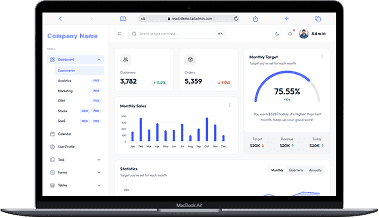
A perfect fit for someone who is getting started with a minimal budget, and looking for the premium features, UI/UX and scalability.
Training Institutes are finding Skilldeck.net quite useful, and are expediting their process & cutting down on the resources across all departments significantly. By reducing their expenses across all departments by at least 40%.
Skilldeck platform is developed by Manjunath Chowdary and team, Ex-Marketing head of Knowledgehut Upgrad, founder of KandraDigital Marketing solutions, and has built the tech and marketing strategies for various training companies.

Manjunath Chowdary
Founder & CEO, SkillDeck


Learn practical ways to improve student retention in training institutes through structured onboarding, engaging classes, regular progress monitoring, responsive support, and consistent communication.
Natasha

Learn how to digitize a traditional training institute using online learning, student management, automation, and digital marketing to simplify operations and support business growth.

Alex

Discover how virtual classroom software helps training institutes manage live classes, trainers, learners, attendance, communication, and online learning from one platform.
Natasha

Discover how training scheduling software helps providers manage courses, batches, trainers, calendars, sessions, and learner schedules while reducing administrative work.
Alex

Discover how certificate management software helps training companies automate certificate creation, verification, tracking, and delivery while reducing administrative work and improving the learner experience.
Natasha
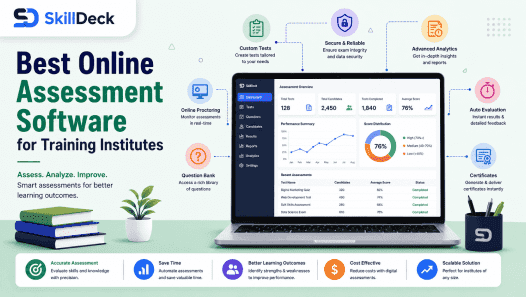
Explore how online assessment software helps training institutes create tests, evaluate learners, track performance, automate results, and improve training outcomes.
Alex