Discover practical strategies to automate training operations, streamline administrative tasks, improve learner engagement, and scale your training business with modern technology.

The training industry has evolved rapidly over the last decade. Whether you are running a corporate training organization, professional certification institute, coaching business, or employee development program, managing training operations manually is becoming increasingly difficult.
Training companies often struggle with repetitive administrative tasks such as learner enrollment, attendance tracking, batch scheduling, trainer coordination, certification management, reporting, and follow-up communication. These activities consume valuable time and resources that could otherwise be invested in improving training quality and growing the business.
This is where training operations automation becomes a game changer.
By automating routine processes, organizations can reduce operational costs, eliminate human errors, improve learner experiences, and scale their training programs more efficiently. Modern training management platforms combine Learning Management Systems (LMS), CRM capabilities, marketing automation, reporting tools, and workflow automation into a single ecosystem, helping training companies streamline end-to-end operations.
In this guide, we'll explore how training companies can automate their operations and create a more productive, scalable, and learner-focused business.
Training operations automation refers to the use of software, workflows, and digital tools to handle repetitive training-related tasks with minimal manual intervention.
Instead of manually managing every stage of the training lifecycle, automation enables organizations to create predefined workflows that execute tasks automatically.
The goal is simple: reduce manual effort while improving consistency, accuracy, and learner satisfaction.
Many training providers still rely on spreadsheets, emails, messaging apps, and disconnected software systems.
While this approach may work initially, it creates operational bottlenecks as the organization grows.
Training coordinators spend countless hours managing registrations, attendance records, trainer schedules, and learner communications.
Manual data entry increases the likelihood of mistakes in learner records, certifications, and reporting.
Managing ten training batches manually may be possible. Managing hundreds becomes extremely difficult without automation.
Missed reminders and follow-ups can negatively impact learner engagement and attendance.
Generating reports manually often results in delays and inaccurate decision-making.
Automated systems address these challenges by creating standardized workflows and centralized management processes. Modern training management platforms offer attendance tracking, progress monitoring, automated reminders, certification management, and analytics capabilities that significantly reduce operational complexity.
One of the most time-consuming tasks for training companies is managing registrations.
Instead of manually processing every registration request, learners can complete enrollment independently, creating a seamless experience from the start.
Managing multiple training batches across locations, trainers, and schedules can become overwhelming.
Training management platforms now offer dedicated batch scheduling and cohort management capabilities that simplify program administration.
Attendance management remains one of the most repetitive administrative tasks.
Automated attendance tracking eliminates manual spreadsheets and provides real-time visibility into learner participation.
Effective communication is essential for training success.
These automated touchpoints improve learner engagement while reducing the workload on administrative teams.
Manual grading consumes considerable time, especially for large-scale training programs.
This enables trainers to focus more on coaching and learner development rather than administrative grading activities.
Certificate generation is often delayed because of manual processes.
Automated certification workflows improve learner satisfaction and ensure compliance requirements are met efficiently.
Data-driven decision-making is critical for training success.
Comprehensive progress reporting allows organizations to identify trends and optimize training outcomes.
A Learning Management System serves as the foundation of training automation.
An LMS centralizes learning delivery while automating many operational tasks.
Modern LMS platforms increasingly integrate workflow automation, CRM functionality, and analytics to support the complete training lifecycle. Enterprise-grade systems also provide multi-tenancy, security, API integrations, and scalability for large organizations.
Many training companies overlook the importance of CRM automation.
When integrated with training management systems, CRM automation enables:
Website inquiries are automatically stored and assigned.
Email campaigns can educate prospects and increase conversions.
Prospective learners receive timely reminders and updates.
Sales and training data remain connected in a single platform.
This integration creates a smooth transition from marketing and sales to learner onboarding and training delivery.
Marketing automation can significantly improve learner acquisition.
Automation helps maintain consistent communication with prospects while reducing marketing effort.
An integrated approach combining website management, CRM, LMS, and marketing automation enables training organizations to operate more efficiently and generate higher returns from their marketing activities.
Identify every operational activity involved in your training lifecycle.
This helps determine which tasks should be automated first.
Focus on repetitive tasks that consume the most time.
Avoid using multiple disconnected tools.
Instead, adopt an integrated platform that combines LMS, CRM, website management, reporting, and automation capabilities.
Automation should be continuously optimized.
Automation improves processes but does not fix poorly designed workflows.
Optimize your processes before automating them.
Multiple disconnected systems create data silos and increase complexity.
Automation should simplify experiences for learners, trainers, and administrators.
Data insights are one of the biggest benefits of automation.
Ensure your platform provides comprehensive reporting and analytics.
The future of training management is increasingly driven by intelligent automation.
Training organizations that embrace automation today will be better positioned to scale operations, improve learning outcomes, and remain competitive in the evolving learning and development landscape.
SkillDeck is an all-in-one platform built specifically for training companies, training institutes, coaches, and corporate learning providers. It combines LMS, CRM, website management, marketing automation, batch management, learner tracking, reporting, certification, and business automation into a single platform. Designed to replace multiple disconnected tools, SkillDeck helps training businesses streamline operations, reduce technology costs, improve learner experiences, and scale efficiently with minimal administrative effort.
Automating training operations is no longer a luxury it has become a necessity for organizations looking to grow efficiently.
From learner enrollment and attendance tracking to certification management, reporting, CRM integration, and marketing automation, modern platforms can significantly reduce manual workload while enhancing operational performance.
By implementing the right automation strategy, training companies can improve productivity, deliver better learner experiences, reduce costs, and focus more on delivering high-quality training rather than managing administrative tasks.
Organizations that adopt integrated training management solutions will gain a significant competitive advantage as the training industry continues to evolve and scale digitally.
Skilldeck replaces 10+ software tools with one integrated, automated platform.
Skilldeck is a fully automated, budget-friendly plug-and-play solution designed for training institutes. It offers every essential feature needed to run and scale a training business, helping organizations accelerate growth with minimal effort and cost.
at a Fraction of the Cost
If you're seeking powerful tech and marketing automation that delivers results, Skilldeck is your go-to solution. Specifically built for training institutes, it offers everything you need in one place — from lead generation to operations — driving growth efficiently and affordably.
...and much more, all designed to scale your business effortlessly.
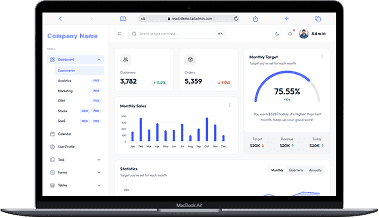
A perfect fit for someone who is getting started with a minimal budget, and looking for the premium features, UI/UX and scalability.
Training Institutes are finding Skilldeck.net quite useful, and are expediting their process & cutting down on the resources across all departments significantly. By reducing their expenses across all departments by at least 40%.
Skilldeck platform is developed by Manjunath Chowdary and team, Ex-Marketing head of Knowledgehut Upgrad, founder of KandraDigital Marketing solutions, and has built the tech and marketing strategies for various training companies.

Manjunath Chowdary
Founder & CEO, SkillDeck

Learn how to measure corporate training ROI by defining objectives, calculating total costs, tracking business outcomes, and evaluating the financial value generated by employee training.
Alex

Learn practical ways to improve student retention in training institutes through structured onboarding, engaging classes, regular progress monitoring, responsive support, and consistent communication.

Natasha
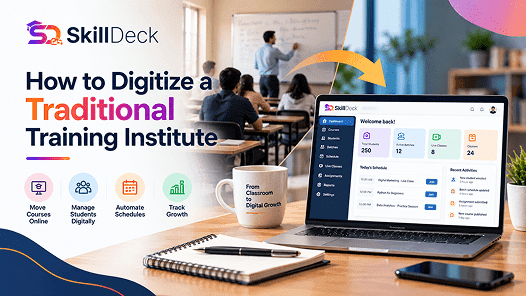
Learn how to digitize a traditional training institute using online learning, student management, automation, and digital marketing to simplify operations and support business growth.
Alex
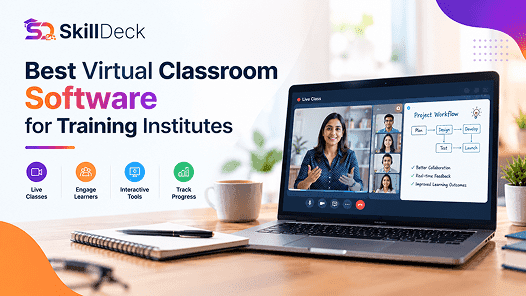
Discover how virtual classroom software helps training institutes manage live classes, trainers, learners, attendance, communication, and online learning from one platform.
Natasha
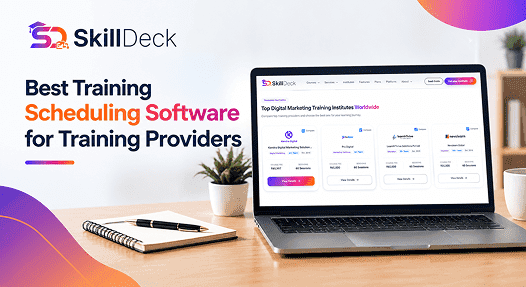
Discover how training scheduling software helps providers manage courses, batches, trainers, calendars, sessions, and learner schedules while reducing administrative work.
Alex
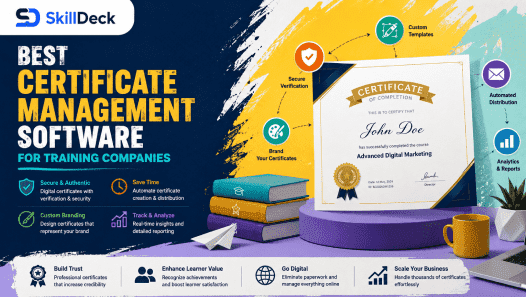
Discover how certificate management software helps training companies automate certificate creation, verification, tracking, and delivery while reducing administrative work and improving the learner experience.
Natasha