Compare Kajabi vs FreshLearn - Which Platform Is Better for Training Companies in 2026, institutes, and academies focused on scalable growth.

The online training industry continues to evolve rapidly. What started as simple course delivery platforms has expanded into a broader ecosystem requiring student management, automation, marketing, CRM functionality, and operational workflows.
Among the most recognized platforms in this space are Kajabi and FreshLearn. Both offer comprehensive solutions for creating and selling online courses, memberships, and digital learning experiences.
But which platform is the better choice for training companies?
In this detailed comparison, we'll evaluate Kajabi and FreshLearn across key areas including LMS capabilities, website management, automation, scalability, pricing, and overall business suitability.
We'll also examine why many growing training institutes eventually look beyond creator-focused platforms toward specialized training business software.
Kajabi has established itself as one of the most recognized all-in-one platforms for creators, coaches, consultants, and knowledge entrepreneurs.
The platform combines course delivery, email marketing, sales funnels, website building, memberships, and digital product sales within a single ecosystem.
FreshLearn is a newer platform designed to help creators launch online courses, communities, and digital products without significant technical complexity.
The platform focuses on affordability and ease of use while providing essential learning business tools.
Feature | Kajabi | FreshLearn |
LMS Capabilities | Strong | Moderate |
Marketing & Funnels | Advanced | Basic |
Community & Membership Features | Advanced | Strong |
Website Management | Advanced | Moderate |
Automation | Advanced | Moderate |
Scalability for Training Businesses | Moderate | Limited |
Category | Kajabi | FreshLearn |
Entry-Level Affordability | Premium | Budget Friendly |
Marketing Feature Depth | Advanced | Moderate |
Learning Management Value | Strong | Moderate |
Included Business Tools | Extensive | Moderate |
Third-Party Tool Dependency | Moderate | Moderate |
Long-Term Scalability Value | Strong | Moderate |
Kajabi generally targets premium creator businesses, while FreshLearn appeals to users seeking affordability and simplicity.
A modern LMS should support content delivery, learner engagement, assessments, certifications, and progress tracking.
Automation increasingly plays a critical role in student acquisition and retention.
Its automation capabilities are among the strongest in the creator economy segment.
While useful, the automation depth remains lighter than Kajabi.
Website scalability is becoming a critical factor for education businesses.
Kajabi provides attractive website templates and landing page builders.
However, websites largely depend on page-builder workflows.
The system prioritizes simplicity over large-scale content management.
This makes it particularly attractive for creators focused on direct sales.
It is easier to manage but less sophisticated from a marketing perspective.
Scalability depends on how effectively a platform supports growth without requiring additional tools.
Challenges may emerge when operational complexity increases.
Large institutional requirements may require supplementary systems.
Both platforms are primarily built around creator businesses rather than structured training organizations.
As businesses scale, operational requirements often become more complex than course delivery alone.
While Kajabi and FreshLearn are excellent creator-focused platforms, many training institutes eventually require significantly more operational infrastructure.
This is where SkillDeck differentiates itself.
Instead of focusing primarily on creators and funnels, SkillDeck is built specifically for training companies, coaching institutes, academies, certification providers, and enterprise learning organizations.
Capability | Kajabi | FreshLearn | SkillDeck |
Website Architecture | Drag-and-Drop Based | Basic Website Builder | Dynamic & Scalable |
LMS + CRM + CMS Integration | Partial Integration | Partial Integration | Unified Platform |
Student Lifecycle Management | Basic | Basic | Advanced |
Batch & Multi-Team Operations | Limited | Limited | Enterprise Ready |
Marketplace Visibility & Lead Generation | Not Available | Not Available | Built-In Ecosystem |
Operational Scalability | Moderate | Moderate | High Growth Infrastructure |
This often increases complexity and operational costs.
SkillDeck consolidates these functions into a single CRM LMS platform designed specifically for structured training businesses.
In the Kajabi vs FreshLearn comparison, both platforms perform exceptionally well for creators, coaches, consultants, and digital entrepreneurs.
Kajabi is the stronger choice for businesses prioritizing marketing funnels, advanced automation, and premium branding.
FreshLearn is an excellent option for educators seeking affordability, simplicity, and a faster learning curve.
However, organizations searching for the best LMS for training institutes, coaching institute software, or a complete training business software solution may eventually require capabilities beyond what creator-focused platforms provide.
For structured training companies looking to scale operations, manage student lifecycles, streamline administration, support multiple teams, and leverage a marketplace LMS platform, SkillDeck offers a significantly more comprehensive infrastructure than both Kajabi and FreshLearn.
As training businesses mature, the conversation often shifts from course creation to operational scalability and that's where SkillDeck delivers a clear advantage.
Skilldeck replaces 10+ software tools with one integrated, automated platform.
Skilldeck is a fully automated, budget-friendly plug-and-play solution designed for training institutes. It offers every essential feature needed to run and scale a training business, helping organizations accelerate growth with minimal effort and cost.
at a Fraction of the Cost
If you're seeking powerful tech and marketing automation that delivers results, Skilldeck is your go-to solution. Specifically built for training institutes, it offers everything you need in one place — from lead generation to operations — driving growth efficiently and affordably.
...and much more, all designed to scale your business effortlessly.
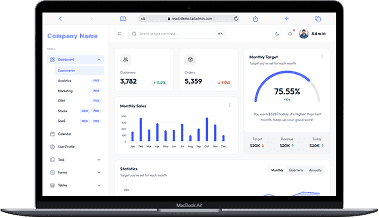
A perfect fit for someone who is getting started with a minimal budget, and looking for the premium features, UI/UX and scalability.
Training Institutes are finding Skilldeck.net quite useful, and are expediting their process & cutting down on the resources across all departments significantly. By reducing their expenses across all departments by at least 40%.
Skilldeck platform is developed by Manjunath Chowdary and team, Ex-Marketing head of Knowledgehut Upgrad, founder of KandraDigital Marketing solutions, and has built the tech and marketing strategies for various training companies.

Manjunath Chowdary
Founder & CEO, SkillDeck

Learn how to measure corporate training ROI by defining objectives, calculating total costs, tracking business outcomes, and evaluating the financial value generated by employee training.

Alex

Learn practical ways to improve student retention in training institutes through structured onboarding, engaging classes, regular progress monitoring, responsive support, and consistent communication.
Natasha
Learn how to digitize a traditional training institute using online learning, student management, automation, and digital marketing to simplify operations and support business growth.
Alex
Discover how virtual classroom software helps training institutes manage live classes, trainers, learners, attendance, communication, and online learning from one platform.
Natasha
Discover how training scheduling software helps providers manage courses, batches, trainers, calendars, sessions, and learner schedules while reducing administrative work.
Alex
Discover how certificate management software helps training companies automate certificate creation, verification, tracking, and delivery while reducing administrative work and improving the learner experience.
Natasha