Compare Moodle Vs SkillDeck - Which Platform Is Better for Training Companies and discover why SkillDeck offers a scalable LMS, CRM, CMS and automation platform.

The Learning Management System (LMS) market has evolved far beyond simply delivering online courses. Modern training companies require a platform that manages marketing, admissions, operations, student engagement, automation, websites, and business growth from a single place.
For many organizations, Moodle has been a trusted open-source LMS for years. It offers flexibility, extensive customization, and a large developer community. However, many growing training businesses now seek Moodle alternatives because maintaining Moodle often requires technical expertise, multiple plugins, hosting management, and integrations with external business tools.
This is where SkillDeck positions itself differently. Instead of functioning as only an LMS, SkillDeck provides a centralized business platform that combines LMS, CRM, CMS, automation, batch management, and marketplace visibility into one scalable ecosystem.
If you're comparing Moodle Vs SkillDeck, this guide explains which platform fits your organization's long-term growth strategy.
Moodle is one of the world's most recognized open-source LMS platforms. Its flexibility makes it popular among universities, schools, and organizations with dedicated technical teams.
However, many organizations eventually require additional software for CRM, marketing automation, website management, and student lifecycle operations.
SkillDeck is purpose-built for modern training organizations that want to operate their entire education business from one platform.
The result is a centralized infrastructure designed for institutes that want operational efficiency while scaling.
Feature | Moodle | SkillDeck |
Website Management | Requires separate CMS or customization | Dynamic CMS with integrated website architecture |
Business Operations | LMS-focused | LMS + CRM + CMS + Automation |
Student Journey | Learning-centric | Complete student lifecycle management |
Batch Operations | Available through plugins | Native batch and schedule management |
Marketplace Visibility | Not available | Built-in marketplace ecosystem |
Enterprise Growth | Requires multiple integrations | Unified enterprise-ready platform |
Criteria | Moodle | SkillDeck |
Initial Software | Open-source | Subscription platform |
Hosting Costs | Separate | Included |
Plugin Costs | Often additional | Core features included |
Maintenance | Technical maintenance required | Managed platform |
Third-party Software | Frequently needed | Minimal dependency |
Overall Business Cost | Varies significantly | Predictable operational investment |
Moodle has long been recognized for delivering structured online learning experiences. Its modular architecture allows organizations to customize learning environments extensively.
However, customization often comes with ongoing maintenance responsibilities.
SkillDeck approaches LMS from a business operations perspective.
Instead of stopping at learning delivery, SkillDeck extends into complete operational management, making it one of the strongest best LMS for training institutes options available today.
One major limitation organizations encounter with Moodle is customer relationship management.
Student inquiries, admissions, follow-ups, payment reminders, and lead nurturing typically require external CRM systems.
SkillDeck eliminates this complexity through its integrated CRM LMS platform.
This creates a seamless journey from prospect to alumni without switching between multiple systems.
Many institutes struggle because their website and LMS operate independently.
With Moodle, institutions frequently depend on WordPress or another CMS to manage content.
SkillDeck offers a different architecture.
Since there is no drag-and-drop dependency, teams can efficiently manage structured websites while maintaining consistent branding across the platform.
Unlike traditional LMS platforms, SkillDeck introduces an additional growth channel through its marketplace ecosystem.
Training companies gain opportunities to improve visibility among learners actively searching for professional courses.
For institutes aiming to grow organically, this built-in marketplace creates value beyond course management.
Scaling an institute involves much more than adding new courses.
SkillDeck centralizes these operations into one platform.
This makes SkillDeck particularly attractive for expanding educational businesses.
Moodle offers tremendous flexibility but often requires administrators with technical knowledge to configure themes, plugins, hosting, and integrations.
SkillDeck emphasizes simplicity without sacrificing enterprise functionality.
Organizations spend less time managing software and more time delivering education.
Many organizations evaluating Moodle alternatives prefer platforms that reduce technical overhead while supporting long-term business growth.
As digital education becomes increasingly competitive, training organizations expect more than a standalone LMS.
Common reasons businesses evaluate Moodle alternatives include:
SkillDeck addresses these requirements through an integrated ecosystem rather than isolated modules.
The comparison between Moodle Vs SkillDeck highlights two platforms built for different objectives.
Moodle remains a reliable and highly customizable LMS, particularly for educational institutions with dedicated technical teams and unique academic requirements. Its open-source flexibility continues to make it a valuable choice for organizations that prefer complete control over their learning environment.
SkillDeck, however, goes far beyond course delivery. It provides a comprehensive business infrastructure by combining LMS, CRM, CMS, automation, dynamic website management, marketplace visibility, batch management, multi-team collaboration, and enterprise-ready workflows within a single platform. This unified approach reduces reliance on third-party tools, improves operational efficiency, and supports long-term institutional growth.
While Moodle & SkillDeck each serve different audiences, SkillDeck delivers a broader feature set for organizations focused on scaling. For training companies, academies, coaching institutes, certification providers, and enterprise learning businesses seeking centralized operations and sustainable growth, SkillDeck stands out as the more complete and future-ready solution.
Skilldeck replaces 10+ software tools with one integrated, automated platform.
Skilldeck is a fully automated, budget-friendly plug-and-play solution designed for training institutes. It offers every essential feature needed to run and scale a training business, helping organizations accelerate growth with minimal effort and cost.
at a Fraction of the Cost
If you're seeking powerful tech and marketing automation that delivers results, Skilldeck is your go-to solution. Specifically built for training institutes, it offers everything you need in one place — from lead generation to operations — driving growth efficiently and affordably.
...and much more, all designed to scale your business effortlessly.
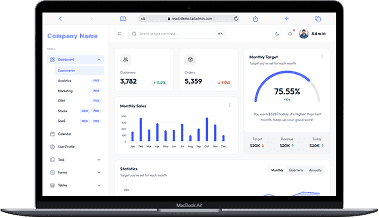
A perfect fit for someone who is getting started with a minimal budget, and looking for the premium features, UI/UX and scalability.
Training Institutes are finding Skilldeck.net quite useful, and are expediting their process & cutting down on the resources across all departments significantly. By reducing their expenses across all departments by at least 40%.
Skilldeck platform is developed by Manjunath Chowdary and team, Ex-Marketing head of Knowledgehut Upgrad, founder of KandraDigital Marketing solutions, and has built the tech and marketing strategies for various training companies.

Manjunath Chowdary
Founder & CEO, SkillDeck

Learn how to measure corporate training ROI by defining objectives, calculating total costs, tracking business outcomes, and evaluating the financial value generated by employee training.

Alex

Learn practical ways to improve student retention in training institutes through structured onboarding, engaging classes, regular progress monitoring, responsive support, and consistent communication.
Natasha
Learn how to digitize a traditional training institute using online learning, student management, automation, and digital marketing to simplify operations and support business growth.
Alex
Discover how virtual classroom software helps training institutes manage live classes, trainers, learners, attendance, communication, and online learning from one platform.
Natasha
Discover how training scheduling software helps providers manage courses, batches, trainers, calendars, sessions, and learner schedules while reducing administrative work.
Alex
Discover how certificate management software helps training companies automate certificate creation, verification, tracking, and delivery while reducing administrative work and improving the learner experience.
Natasha