Creating a good training program does not automatically bring learners to an institute. Training companies need to communicate their offerings to the right audience, explain why a course is relevant, and create enough interest for prospective learners to take the next step. Advertising and promotions can help training businesses turn their courses into visible opportunities. From digital advertising and social media campaigns to limited-period offers and targeted course promotions, institutes can use different marketing approaches to attract attention and generate enquiries. The challenge is managing these activities in a way that is consistent, measurable, and connected to the rest of the learner acquisition process. For training companies, effective promotion is not simply about publishing more advertisements. It is about reaching relevant audiences with the right course, message, timing, and call to action.
Why Advertising Matters for Training Businesses
Training companies operate in a competitive environment where learners can choose from numerous institutes, academies, online programs, and specialized providers. Even when an institute has experienced trainers and strong courses, potential learners may not discover those programs without sufficient visibility. Advertising can help training businesses introduce their offerings to people who may already have an interest in a particular subject or professional goal. A well-planned campaign can support objectives such as: Increasing awareness of the training brand Promoting specific courses Generating learner enquiries Filling upcoming batches Supporting new course launches Reaching new learner segments Promoting workshops and webinars Encouraging registrations Re-engaging previous prospects Supporting enrollment growth The purpose of advertising should therefore be connected to a clear business objective rather than simply increasing impressions.
Promote Courses to the Right Audience
One of the biggest advantages of digital advertising is the ability to define who should see a promotion. A training company may not want every advertisement to reach the same audience. For example, a beginner programming course may be relevant to students and career starters, while an advanced cloud certification program may be better suited to professionals with existing technical experience. Audience targeting allows marketing teams to build campaigns around characteristics such as: Skills of interest Professional interests Career goals Learning preferences Course interests Experience levels Geographic markets Previous interactions Existing learner or prospect segments This makes it possible to create more relevant promotional messages instead of using one generic advertisement for every course.
Use Social Media as a Course Promotion Channel
Social media can be an important part of a training company's promotional strategy because learners often discover educational content through social platforms. Training businesses can promote their programs through different content formats, including: Course announcements Short educational videos Instructor introductions Student success stories Training tips Webinar promotions Workshop announcements Course highlights Certification information Limited-period offers The objective is not to make every social post a direct sales message. Educational and useful content can create awareness first, while promotional posts can encourage interested users to explore a particular course or contact the institute.
Create Campaigns Around Specific Training Goals
Different courses may require different promotional approaches. A short-term workshop might need a campaign designed around registrations over a limited period. A long-duration certification program may require a longer awareness and consideration process. Training companies can structure campaigns around objectives such as:
New Course Launches
Introduce a newly launched program, explain its target audience, and communicate what learners can expect.
Batch Admissions
Promote upcoming batches and encourage prospective learners to enquire before the start date.
Workshop Registrations
Use focused campaigns to attract registrations for short-duration workshops, seminars, or practical sessions.
Webinar Promotion
Promote educational webinars that can introduce potential learners to an instructor, subject, or training approach.
Seasonal Promotions
Create campaigns around specific periods when learners may be more likely to explore training opportunities.
Professional Upskilling
Promote advanced programs to working professionals interested in developing new skills. Each campaign can have its own audience, message, landing page, offer, and conversion goal.
Build Promotions Around the Course Value
Advertising should communicate more than the name of a course. Potential learners usually want to understand why the program deserves their time and money. A promotional message can highlight relevant aspects such as: Skills covered Course structure Learning format Practical projects Instructor expertise Certification Program duration Beginner or advanced level Upcoming batch Flexible learning options The most useful message depends on the course and audience. For a beginner course, simplicity and learning outcomes may matter more. For a professional certification program, specialization and career relevance may be stronger promotional themes.
Use Different Promotional Offers
Promotions can provide an additional reason for interested learners to take action. Training companies can experiment with different promotional approaches based on their business model. Examples include: Early-bird enrollment offers Limited-period discounts Workshop bundles Course bundles Referral benefits Free introductory sessions Demo classes Trial learning access Special batch offers Group enrollment programs Promotions should be structured carefully so that they support the value of the training program rather than making price the only reason to enroll. A strong offer can create urgency, but the underlying course quality and relevance should remain central to the communication.
Connect Advertising With Landing Pages
An advertisement should lead the learner toward a relevant next step. Sending every campaign to the same general homepage can make it harder for visitors to understand what they should do next. A course-specific campaign can instead lead to a focused page containing: Course overview Learning outcomes Curriculum Duration Training format Instructor information Upcoming batches Fees Frequently asked questions Enquiry form This creates a stronger connection between the advertisement and the learner's intent. For example, someone clicking an advertisement for a data analytics course should ideally reach information about that specific program rather than a generic institute homepage.
Turn Ad Responses Into Organized Enquiries
Generating clicks is not the final objective. For most training companies, the more important outcome is a qualified learner enquiry that can move into counselling or enrollment. Advertising campaigns can generate enquiries from different sources. Without an organized system, these prospects can become difficult to track. A connected workflow can help businesses capture information such as: Prospect name Contact information Course interest Campaign source Preferred learning format Enquiry date Counsellor assignment Follow-up status Enrollment outcome This creates a clearer connection between marketing activity and admissions operations.
Measure More Than Advertising Reach
A campaign that receives many views is not necessarily a successful campaign. Training companies should consider whether promotional activity is contributing to meaningful business outcomes. Useful measures can include: Ad impressions Clicks Enquiries Cost per enquiry Qualified prospects Counselling conversations Registrations Enrollments Course-level conversion Campaign-generated revenue Looking at these stages together gives marketing teams a better understanding of what happens after someone interacts with an advertisement. For example, one campaign may generate many enquiries but few enrollments, while another may generate fewer enquiries but a higher percentage of qualified prospects. That difference can influence future campaign decisions.
Promote Different Training Formats
Advertising strategies can also change according to the way a program is delivered.
Online Training
Digital campaigns can reach learners beyond the institute's immediate geographic market.
Classroom Training
Local or region-specific campaigns can help promote programs to learners who can attend physical sessions.
Blended Learning
Promotions can explain the combination of online learning and instructor-led interaction.
Corporate Training
Campaigns can target organizations rather than individual learners and communicate business-focused training solutions.
Short-Term Programs
Workshops and intensive programs can benefit from campaigns built around a specific date or registration deadline.
Retarget People Who Already Showed Interest
Not every prospective learner enrolls after the first interaction. Someone may visit a course page, submit an enquiry, attend a webinar, or interact with a social media post and still need more information before making a decision. Retargeting can help training businesses stay visible to people who have already demonstrated some level of interest. For example, an institute could create follow-up promotions for people who: Visited a course page Engaged with a campaign Started but did not complete an enquiry Attended a webinar Previously enquired about a course Downloaded course information This approach can make promotional activity more relevant than repeatedly advertising to completely new audiences.
Coordinate Promotions With Admission Cycles
Training companies often work around specific enrollment periods. A campaign may need to begin several weeks before a batch starts and increase communication as the enrollment deadline approaches. Marketing and admissions teams therefore need visibility into upcoming programs. A coordinated process can look like: Course Planning → Campaign Creation → Promotion → Enquiry Capture → Counselling → Enrollment When these stages are connected, marketing teams can promote courses based on actual business priorities rather than running disconnected campaigns.
Support New Course Launches
Launching a new course requires a different promotional approach from maintaining an established program. Before launch, an institute can build awareness through educational content, instructor introductions, announcements, or webinar sessions. During launch, the business can promote the course details, registration options, and introductory offers. After launch, the institute can evaluate campaign performance and learner response. This creates a complete promotional cycle: Awareness → Interest → Launch → Enquiry → Enrollment → Optimization Using a repeatable launch process can help training companies introduce new programs more efficiently.
Common Advertising Challenges for Training Companies
Training companies often face several challenges when managing promotions manually or through disconnected tools.
Unclear Campaign Ownership
When multiple people manage advertising, content, and enquiries, it can become difficult to understand who is responsible for each activity.
Disconnected Lead Data
Enquiries generated through different campaigns may end up in separate spreadsheets, forms, inboxes, or messaging platforms.
Inconsistent Promotions
Different teams may communicate the same course using inconsistent information.
Difficulty Tracking Conversions
Without connecting advertising activity to enquiries and enrollments, businesses may struggle to understand which campaigns are producing useful results.
Too Much Manual Work
Creating campaigns, tracking responses, assigning prospects, and following up manually can consume significant team time.
How Skilldeck Supports Advertising and Promotions
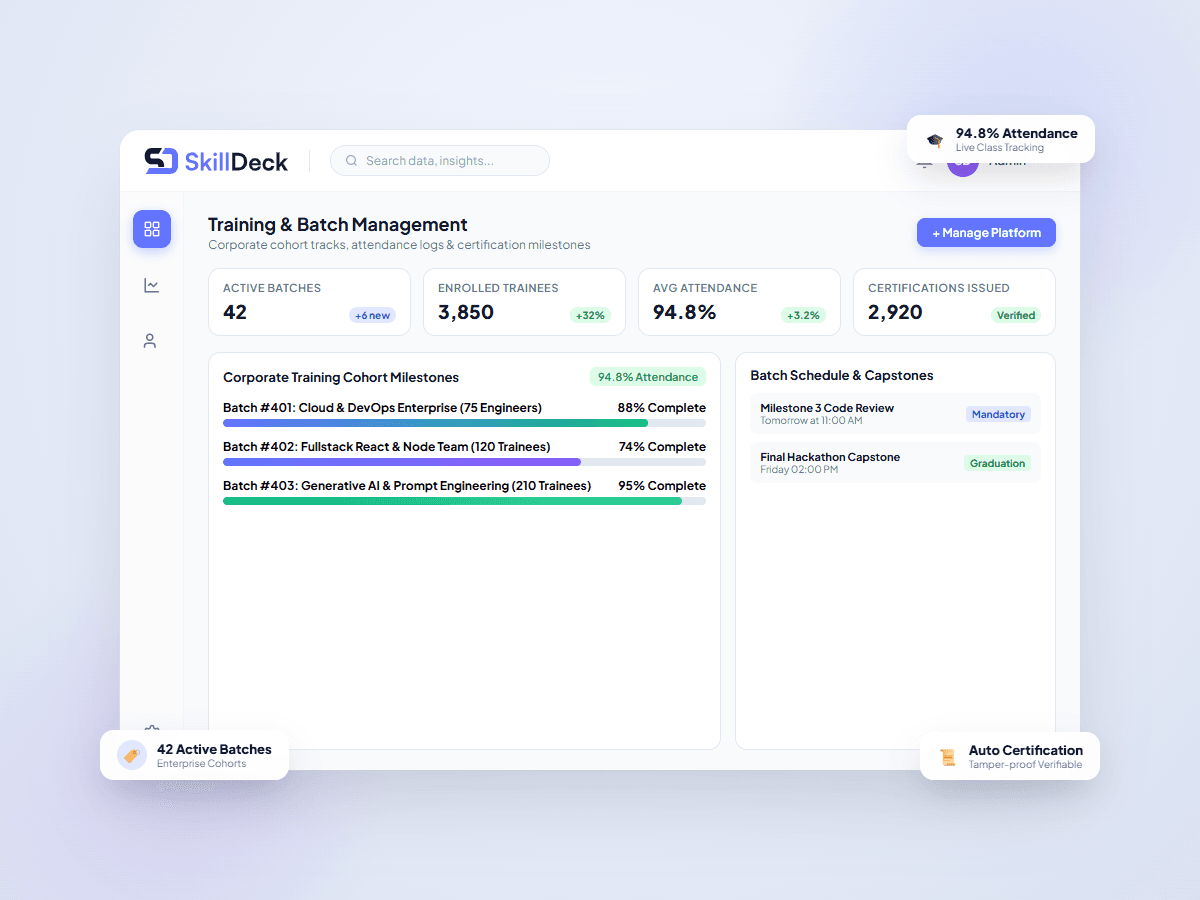
Skilldeck gives training companies a broader environment for connecting marketing activity with their training operations. Instead of treating advertising as an isolated function, training businesses can connect promotional activities with course information, learner enquiries, CRM workflows, and learning operations. A typical process can move from: Promotion → Lead Capture → CRM → Follow-Up → Enrollment → LMS This connection can help teams understand what happens after a learner responds to a campaign. For example, a training company can promote a course, capture interested prospects, organize those prospects through CRM workflows, assign follow-ups to counsellors, and move successful prospects toward enrollment. Skilldeck can also bring CMS, LMS, CRM, and automation capabilities together, helping training companies reduce the technology fragmentation that can occur when marketing and training operations are managed through separate systems.
Choose Advertising Tools That Fit Your Training Business
Before selecting a platform or building a promotional workflow, training companies should consider what they actually need. Important areas include: Campaign management Audience segmentation Social media coordination Lead capture CRM integration Follow-up automation Course-specific landing pages Performance reporting Conversion tracking Team collaboration Workflow automation The right setup depends on the organization's size, course catalog, marketing channels, and enrollment process. A small academy may need a straightforward campaign and enquiry workflow, while a large training company may require multiple teams, campaigns, programs, and audience segments.
Build a More Structured Training Promotion Strategy
Effective advertising is not about running campaigns continuously without understanding their outcomes. Training companies can build a stronger approach by connecting four important areas: Audience + Offer + Promotion + Follow-Up The audience determines who should receive the message. The offer determines what the learner is being encouraged to explore. The promotion determines how the course reaches that audience. The follow-up determines what happens after someone expresses interest. When these elements work together, advertising becomes part of a structured learner acquisition process.
Final Thoughts
Advertising and promotions can help training companies increase awareness, introduce courses to new audiences, generate enquiries, fill upcoming batches, and support enrollment growth. Digital ads, social media campaigns, targeted offers, webinars, and retargeting can all play different roles within a broader promotional strategy. However, successful promotion does not end when someone clicks an advertisement. The real opportunity begins when that interest is captured, organized, followed up, and converted into a meaningful learner relationship. With Skilldeck, training companies can connect promotional activity with CRM, CMS, LMS, and automation workflows, creating a more organized path from course promotion to learner enquiry and enrollment.