
Training companies have valuable knowledge to share. Instructors understand their subjects, trainers work with learners, and institutes often have practical experience that can help people make better learning and career decisions. Content marketing gives training businesses a way to turn that knowledge into useful digital content. Guest author posts add another dimension to this strategy by allowing training companies and their subject experts to contribute articles to relevant external websites, publications, education platforms, and industry communities. These contributions can introduce the brand to new audiences while building credibility around specific areas of expertise. When guest authorship and content marketing are planned together, they can support brand awareness, search visibility, authority building, referral traffic, learner engagement, and lead generation.
What Is Guest Author Content Marketing?
Guest author content marketing involves creating useful, original articles for external websites or publications that are relevant to a training company's industry or target audience. Instead of publishing every piece of content only on its own website, a training business can contribute expertise to other platforms. For example, a technology training company could publish an article about emerging skills in software development on a relevant technology publication. A professional training provider could contribute an article about leadership development to a business-focused platform. The objective is not simply to place a link. The content should provide genuine value while introducing the author's expertise and training brand to a relevant audience.
Why Content Authority Matters for Training Companies
Learners often want confidence before choosing a training provider. They may want to know whether an institute understands the subject, whether its instructors have relevant knowledge, and whether the organization can provide meaningful learning experiences. Consistently publishing useful content can help demonstrate expertise. A training company can use content to explain: Industry concepts Learning paths Technical topics Career considerations Certification options Skill requirements Common learner challenges Practical applications Industry developments Course-related questions Over time, this creates a body of knowledge associated with the training brand. Guest author contributions can extend that visibility beyond the company's own website.
Turn Instructor Knowledge Into Marketing Content
Training companies already have a valuable content resource: their instructors and subject experts. Instead of relying entirely on generic marketing copy, businesses can use instructor knowledge to create more practical articles. An instructor could contribute content about: Common mistakes beginners make How to approach a technical subject Skills required for a particular role Practical learning techniques Industry tools and technologies Certification preparation Project-based learning Career transition considerations This type of content can feel more useful because it is based on practical teaching experience. It also gives the training brand an opportunity to communicate expertise without turning every article into a direct course advertisement.
Choose Topics Based on Learner Questions
Strong content marketing begins with relevant topics. Training companies should understand what potential learners want to know before choosing article subjects. A learner researching a course may have questions such as: Which skills should I learn first? Is this technology suitable for beginners? What does a particular certification involve? How can I build practical experience? What tools are commonly used? What should I learn before an advanced course? How long does it take to develop a particular skill? These questions can become content opportunities. Instead of creating articles simply because a keyword has search volume, training companies can build content around genuine learner concerns. This can make the content more useful and naturally connect educational information with relevant training programs.
Build a Guest Author Strategy Around Expertise
Guest posting works best when the topics are closely connected to the training company's expertise. An institute should identify areas where it can provide meaningful insight. For example, a data science training provider might contribute articles about data visualization, machine learning concepts, analytics workflows, or practical data skills. A cybersecurity institute could focus on security awareness, common security concepts, emerging technologies, or professional skill development. The important principle is relevance. A guest article should make sense for both the publishing website and the training company. This creates stronger alignment between: Expertise → Content Topic → Relevant Publication → Target Audience → Brand Discovery
Publish on Relevant Industry Platforms
Not every website is suitable for guest content. Training companies should prioritize platforms whose audience overlaps with their target learners or business market. Potential publishing environments may include: Education websites Technology publications Industry blogs Professional communities Career platforms Business publications Training and learning websites Specialized subject portals The quality and relevance of the publication matter more than simply collecting a large number of guest posts. A relevant article on a respected industry platform can be more useful than numerous contributions placed on unrelated websites.
Use Guest Articles to Reach New Audiences
One of the primary benefits of guest authorship is access to audiences that may not already know the training company. A learner may encounter an institute for the first time while reading an article written by one of its instructors. The journey could look like: Guest Article → Author Recognition → Training Brand Discovery → Website Visit → Course Exploration → Enquiry Not every reader will immediately become a lead. The initial objective may simply be awareness. Repeated exposure to useful content can gradually make the training company more familiar to potential learners.
Support Search Visibility With Useful Content
Content marketing can also contribute to a training company's search strategy. A well-planned content library can cover different stages of the learner journey. For example: Beginner Questions → Subject Education → Skill Development → Course Comparison → Program Research → Enrollment Each stage can be supported by relevant content. Guest author contributions can complement this strategy by increasing the number of external references and opportunities for people to discover the brand. However, SEO content should remain useful and readable. Repeating keywords excessively or publishing low-value articles can weaken the quality of the overall strategy.
Earn Relevant Backlinks Through Guest Content
When a reputable external publication references a training company's website or relevant resource, it can create a valuable connection between the two sites. Guest author contributions may provide opportunities for such references when the publishing site's editorial guidelines allow them. The important consideration is relevance. A link should make sense in the context of the article and provide additional value to readers. For example, an article explaining a particular technical concept could naturally reference a relevant course guide or educational resource from the training company. The goal should be to earn useful references rather than pursue links purely for quantity.
Create Content That Does Not Read Like an Advertisement
A common mistake in guest content is turning every article into a sales pitch. Readers generally expect editorial content to teach or inform them. Instead of writing: "Our institute offers the best course in this subject." A stronger approach is to explain the subject itself. For example, an article can discuss: What the skill involves Why it matters Where beginners commonly struggle Which concepts should be learned first What practical skills are useful How learners can approach the subject The training company can then be introduced naturally through the author profile or a relevant contextual reference. This makes the content more credible and useful.
Develop Thought Leadership for Training Brands
Thought leadership is about becoming a recognizable source of useful knowledge within a particular area. For training companies, this can be particularly valuable because education businesses are built around expertise. An institute can establish authority by consistently discussing subjects within its specialization. For example, a professional technology training company can publish insights about changing technical skills, while a management academy can contribute articles about leadership, workplace learning, or professional development. The goal is to create an identifiable area of expertise. Over time, learners may begin to associate the training company with that subject area.
Use Different Content Formats
Guest author marketing does not have to depend entirely on traditional articles. Training businesses can create different forms of educational content depending on the publication and audience. These can include: Expert articles Industry explainers How-to guides Opinion pieces Educational tutorials Research-based articles Case studies Interviews Expert roundups Trend analysis Different formats can help the training company communicate its expertise in different ways. For example, a tutorial may demonstrate practical knowledge, while an opinion article can communicate the perspective of an experienced trainer.
Connect Content Marketing With Course Pages
Content should have a relationship with the training company's actual offerings. Suppose an institute provides a course in cloud computing. Its content strategy could include articles covering: Cloud computing fundamentals Cloud architecture concepts Cloud security Beginner learning paths Cloud certification preparation Practical cloud projects Career-oriented cloud skills Relevant articles can then guide interested readers toward deeper course information. This creates a content ecosystem rather than treating every article as an isolated marketing asset.
Create Content for Different Learner Stages
Not every potential learner is ready to enroll immediately. Content can support people at different stages of their decision process.
Awareness Stage
Readers are discovering a subject or problem for the first time. Educational articles and introductory explainers can work well here.
Research Stage
Readers understand the subject but want to investigate their learning options. Detailed guides, comparisons, and skill roadmaps can help.
Consideration Stage
Potential learners are evaluating specific programs or training providers. Course-focused resources, instructor information, and practical learning details can support this stage.
Decision Stage
The learner is close to taking action. Clear course information, enquiries, demonstrations, or registration opportunities can provide the next step. This approach helps content support the wider learner journey.
Repurpose High-Value Training Knowledge
Training companies can also make better use of content they already produce. An instructor presentation could become an educational article. A webinar discussion could become several blog topics. A frequently asked student question could become a detailed guide. A course module could inspire an introductory industry article. This creates a content repurposing process: Teaching Knowledge → Original Content → Guest Article → Social Content → Website Resource Repurposing can help marketing teams maintain consistency without requiring every piece of content to be developed entirely from scratch.
Measure the Value of Guest Author Marketing
Content marketing should be evaluated using more than the number of articles published. Training companies can monitor: Referral traffic Article engagement Website visits Course page visits Brand searches Enquiries Lead sources Backlink growth Content-assisted conversions Audience engagement The objective is to understand whether content is helping the business reach relevant audiences and create meaningful opportunities. A guest article that generates fewer clicks but reaches a highly relevant professional audience may be more valuable than an article with large but unrelated traffic.
Common Mistakes in Guest Content Marketing
A poorly planned strategy can reduce the value of guest authorship.
Choosing Irrelevant Websites
Publishing content on websites unrelated to the training company's subject area can produce weak audience relevance.
Writing Thin Content
Short, generic articles that provide little practical value are unlikely to build authority.
Overusing Promotional Language
Readers should gain useful information rather than feel that they are reading an advertisement.
Focusing Only on Links
A guest article should first provide value to its audience. Links should support the content rather than dominate it.
Using the Same Article Everywhere
Duplicate guest content can weaken the overall strategy. Each contribution should be created specifically for its intended publication and audience.
Ignoring the Author's Expertise
Guest author campaigns become stronger when the author has a clear relationship with the topic being discussed.
How Skilldeck Supports Content-Led Training Growth
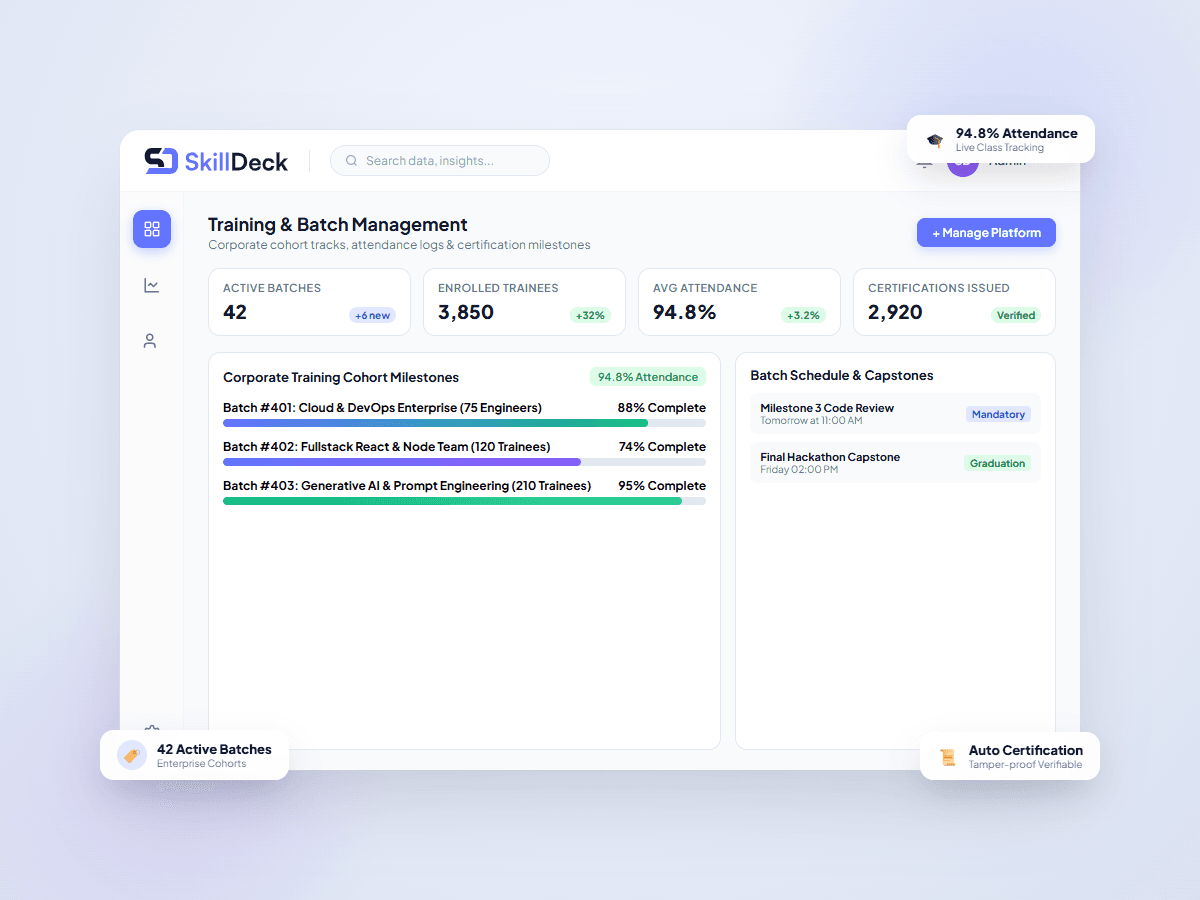
Skilldeck provides training businesses with a broader digital environment where marketing activity can connect with the rest of the learner journey. Content marketing can bring new audiences to the training company's digital presence. Once those visitors arrive, they need useful course information and a clear way to express interest. Skilldeck can connect these stages through its broader CMS, CRM, LMS, and automation capabilities. A content-led journey can look like: Guest Content → Website Visit → Course Discovery → Enquiry → CRM → Follow-Up → Enrollment → Learning The CMS can support website and course content, while CRM workflows can help organize enquiries generated through marketing activities. LMS capabilities can support the learner after enrollment. This gives training companies an opportunity to connect authority-building activities with actual business operations rather than managing content marketing separately from learner acquisition.
Build a Long-Term Content Authority Program
Guest author marketing is most effective when treated as a long-term strategy. Training companies can develop a publishing calendar around their key areas of expertise. A sustainable approach can include: Identifying core subject areas Researching learner questions Developing original content ideas Finding relevant publishing opportunities Creating publication-specific articles Maintaining author profiles Connecting content with useful resources Tracking referral traffic and enquiries Reviewing which topics perform best Over time, the training business can build a larger collection of educational resources and external contributions. This creates cumulative value rather than relying on one promotional campaign.
Make Content a Business Asset
Good content can continue to support a training company after it has been published. An educational article can introduce the brand to new readers months after publication. A useful guide can generate search traffic. An expert contribution can strengthen the reputation of an instructor. A relevant external reference can introduce the company to a new professional audience. This makes content different from short-lived promotional activity. When content is aligned with the company's expertise and course catalog, it becomes a long-term digital asset that can support awareness, trust, and learner acquisition.
Final Thoughts
Guest author and content marketing can help training companies build visibility by sharing useful expertise with audiences beyond their own websites. Through relevant articles, expert contributions, educational resources, and SEO-focused content, institutes can strengthen authority while creating new opportunities for potential learners to discover their programs. The strongest approach is not to publish content simply for volume or links. It is to consistently create useful information around subjects the training company genuinely understands. With Skilldeck, content-led marketing can connect with CMS, CRM, LMS, and automation workflows, helping training businesses create a more complete path from expert content and brand discovery to course enquiries, enrollment, and learning.