Compliance training is an essential part of managing employee responsibilities in many organizations. Employees may need to complete courses related to workplace policies, information security, data protection, safety, ethics, industry regulations, or internal standards.
The challenge is not simply delivering these courses. Organizations also need to know whether the right employees have completed the required training, when training was completed, which certifications are still valid, and who needs to complete or renew a requirement.
Managing this information manually can become increasingly difficult as employee numbers and compliance programs grow.
An LMS for compliance training provides a structured environment for assigning mandatory learning, monitoring completion, managing assessments and certificates, sending reminders, and maintaining training records. It gives L&D, HR, compliance, and management teams a clearer view of organizational training requirements.
What Is an LMS for Compliance Training?
An LMS for compliance training is a learning management system designed to help organizations deliver, assign, monitor, and document mandatory training programs.
It combines learning delivery with tracking and administrative capabilities required for compliance-focused training.
Instead of relying on spreadsheets, email reminders, paper certificates, and manually prepared reports, organizations can manage compliance learning through a centralized system.
Depending on organizational requirements, a compliance training LMS can support:
- Mandatory course assignments
- Employee training records
- Compliance assessments
- Course completion tracking
- Certificates
- Training expiry monitoring
- Automated reminders
- Recurring training programs
- Compliance reports
- Audit-ready records
- Department and role-based assignments
- Manager visibility
- Learning progress tracking
The objective is to create a reliable process for making sure employees receive the training they are expected to complete and that the organization can demonstrate training activity when required.
Why Organizations Need an LMS for Compliance Training
Compliance training often follows specific rules.
Some courses may need to be completed by every employee, while others may apply only to particular departments, job roles, locations, or responsibilities.
Some training may also need to be repeated periodically.
When these requirements are managed manually, several questions can become difficult to answer:
- Who has completed the required training?
- Who has not started?
- Which employees are overdue?
- When does a certification expire?
- Which departments have pending requirements?
- Has a particular employee completed the required assessment?
- Can the organization produce training records when needed?
A compliance-focused LMS can bring this information into one structured environment.
It allows organizations to move from reactive follow-up toward a more systematic approach to compliance learning.
Key Features of an LMS for Compliance Training
1. Mandatory Training Assignment
Compliance courses often need to be assigned to specific groups of employees.
An LMS can help administrators assign mandatory training based on departments, roles, teams, locations, or other learner categories.
This prevents administrators from having to manually communicate the same training requirement to every employee.
2. Role-Based Compliance Programs
Not every employee has the same compliance responsibilities.
For example, employees handling sensitive information may require different training from employees working in operational or administrative roles.
Role-based assignment allows organizations to provide relevant compliance courses to the employees who need them.
3. Centralized Employee Training Records
A centralized learner profile can maintain important information about an employee's compliance learning activity.
Administrators can review assigned courses, completion information, assessment activity, certificates, and other relevant records from one location.
This makes it easier to understand an employee's training history.
4. Course Completion Tracking
Completion tracking is one of the most important functions of compliance learning.
An LMS can provide visibility into whether assigned employees have completed their required courses.
Instead of maintaining manual spreadsheets, administrators can review training status through the platform.
5. Automated Compliance Reminders
Employees may overlook mandatory training when they are managing their regular responsibilities.
Automated reminders can help notify learners about assigned courses, approaching deadlines, incomplete training, or renewal requirements.
This can reduce the amount of manual follow-up required from L&D and compliance teams.
6. Overdue Training Identification
Not every learner completes mandatory training on schedule.
A compliance LMS can help administrators identify incomplete or overdue learning activities.
This allows responsible teams to focus their attention on outstanding requirements rather than manually checking every employee record.
7. Compliance Assessments
Some compliance programs require learners to demonstrate their understanding after completing training.
An LMS can support quizzes, tests, and other assessments as part of the learning workflow.
Assessment results can provide additional information about learner understanding and help organizations identify areas that may require reinforcement.
8. Certificate Management
Certificates can provide evidence that an employee has completed a particular training program.
A compliance LMS can associate certificates with learner records and provide administrators with greater visibility into certification activity.
This can be particularly useful when training credentials need to be reviewed or maintained over time.
9. Certificate Expiry Tracking
Some certifications and training requirements may need periodic renewal.
Expiry tracking can help organizations identify certifications that are approaching their renewal dates.
Automated notifications can then support timely retraining or recertification.
10. Recurring Compliance Training
Certain compliance programs may need to be completed annually, periodically, or according to an organization's internal schedule.
A compliance training LMS can support recurring learning requirements so that organizations do not have to rebuild the same tracking process each time a new training cycle begins.
11. Department-Wise Compliance Tracking
Organizations may want to understand compliance completion at a department or team level.
A centralized LMS can help administrators review completion patterns across different groups.
This can make it easier to identify teams with a higher number of pending training requirements.
12. Manager-Level Visibility
Managers may need to know whether members of their teams have completed mandatory learning.
With appropriate permissions, an LMS can provide managers with visibility into relevant employee training status.
This creates an additional layer of accountability without requiring managers to maintain separate records.
13. Automated Learning Workflows
Compliance training often involves repetitive processes.
For example, a new employee may need to receive mandatory training, complete an assessment, receive a certificate, and repeat certain learning after a defined period.
Automated workflows can help organize these activities and reduce unnecessary administrative effort.
14. Compliance Reporting
L&D and compliance teams need reports that clearly communicate training status.
An LMS can provide reports covering areas such as:
- Course completion
- Pending training
- Overdue learners
- Assessment results
- Certification status
- Department completion
- Training activity
- Recurring training requirements
These reports can help teams understand the current state of compliance learning.
15. Audit-Ready Training Records
Organizations may need to demonstrate that employees received and completed specific training.
A centralized LMS can help maintain organized records of learning activity, assessments, completions, and certificates.
Having structured records available can make the preparation process more manageable when training documentation needs to be reviewed.
Common Compliance Training Programs
A compliance LMS can support many different types of mandatory learning depending on the organization's industry and internal requirements.
Workplace Safety Training
Organizations can use structured learning programs to educate employees about workplace safety procedures, responsibilities, and internal safety practices.
Information Security Training
Employees may require training on secure technology usage, password practices, phishing awareness, data handling, and organizational security policies.
Data Protection Training
Organizations handling personal or sensitive information may provide employees with training covering appropriate data handling and internal privacy practices.
Ethics and Conduct Training
Businesses can use compliance learning to communicate expectations around workplace conduct, ethical behavior, conflicts of interest, and organizational policies.
Industry-Specific Training
Certain industries may have specialized training requirements based on their operational environment. An LMS can provide a structured way to assign and monitor those programs.
New Employee Compliance Training
Organizations can include mandatory compliance courses within employee onboarding so that new hires receive important training early in their employment journey.
Benefits of Using an LMS for Compliance Training
Better Visibility Into Training Status
A centralized system gives L&D and compliance teams a clearer view of completed, pending, and overdue training.
Reduced Manual Follow-Up
Automated reminders and learning workflows can reduce the need to repeatedly contact employees about mandatory courses.
More Organized Training Records
Employee learning activity can be maintained in a centralized environment instead of being distributed across spreadsheets, email conversations, and separate files.
Easier Certificate Management
Certificates and certification information can be associated with learner records, making it easier to monitor training credentials.
Improved Accountability
Learners, managers, L&D teams, and compliance administrators can have clearer responsibilities and visibility into training requirements.
More Consistent Compliance Processes
Standardized course assignments and workflows can help organizations apply compliance training processes more consistently across teams.
Better Audit Preparation
Centralized training records and reports can make it easier for responsible teams to gather relevant information when training documentation needs to be reviewed.
Scalable Compliance Management
As employee numbers increase, manual compliance tracking becomes harder to maintain. An LMS provides a more scalable structure for managing larger learner populations.
How an LMS Supports the Compliance Training Lifecycle
A compliance training LMS can support the entire process rather than focusing only on course delivery.
Identify the Requirement
The organization determines which employees need particular compliance training.
Assign the Training
Courses are assigned to the relevant employees, departments, roles, or learner groups.
Deliver the Learning
Employees access the required training through the LMS.
Evaluate Understanding
Assessments or knowledge checks can be used where required.
Record Completion
The system maintains information about the learner's completion status.
Issue Certification
Where applicable, certificates can be associated with successful completion.
Monitor Deadlines
Administrators can identify learners who have not completed their requirements.
Send Reminders
Automated notifications can encourage employees to complete pending training.
Monitor Renewal
For recurring requirements, the organization can track when additional training may be needed.
This creates a more structured cycle for managing compliance learning.
Challenges of Managing Compliance Training Manually
Manual compliance training management can create several operational challenges.
Scattered Records
Training information may be stored across spreadsheets, emails, paper certificates, and different platforms. This makes it harder to establish a single reliable view of employee training.
Missed Deadlines
Without automated reminders, employees may overlook required training or renewal dates.
Repetitive Administrative Work
L&D and compliance teams may spend significant time sending reminders, updating records, preparing reports, and checking individual completion statuses.
Difficulty Tracking Large Teams
As the workforce grows, manually checking compliance status for hundreds or thousands of employees becomes increasingly difficult.
Certification Gaps
When certificates are maintained manually, organizations may have difficulty identifying expired or approaching certifications.
Inconsistent Processes
Different departments may follow different methods for assigning and monitoring compliance learning, creating inconsistencies across the organization.
An LMS can provide a centralized structure for reducing these administrative difficulties.
How to Choose an LMS for Compliance Training
The right compliance LMS should fit the organization's actual training requirements.
Compliance Assignment Controls
Check whether the platform allows administrators to assign learning based on roles, departments, locations, or other relevant learner groups.
Completion Tracking
Make sure the system provides clear visibility into completed, pending, and overdue training.
Certification Capabilities
If certificates are part of your compliance process, evaluate certificate generation, storage, status tracking, and renewal workflows.
Automated Reminders
Look for flexible notification options that can support deadlines, incomplete courses, and recurring training.
Reporting
Review whether reports provide the information required by L&D, compliance teams, managers, and organizational leadership.
Assessment Management
Consider whether the LMS can support the assessment formats used by your compliance programs.
Recurring Training
If employees need to repeat training periodically, verify that the platform can support recurring assignments and tracking.
Access Control
Compliance information can contain sensitive employee and organizational data. Appropriate user permissions should therefore be considered during platform evaluation.
Integration
Consider whether the LMS can connect with other systems used to manage employees, training, communication, or business operations.
Scalability
The platform should be capable of supporting increasing numbers of employees, courses, departments, and compliance requirements.
Why Skilldeck for Compliance Training?
For organizations that manage training as part of a broader business operation, compliance learning does not exist in isolation.
Employee or learner information may originate from other systems, while communication, training administration, reporting, and operational workflows may involve different teams.
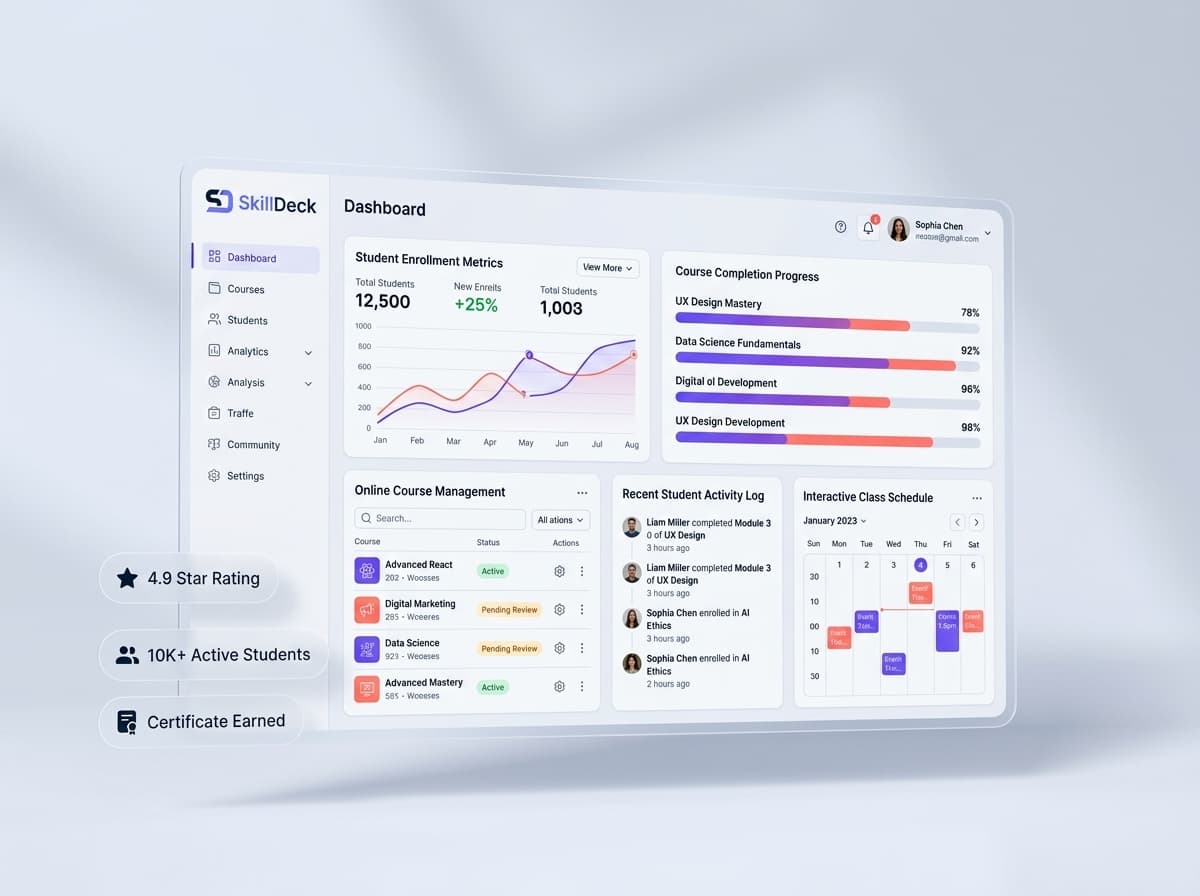
Skilldeck provides a connected environment that combines LMS capabilities with CRM, website management, and automation. This can help training organizations and learning businesses reduce the complexity created by managing separate technology systems.
With a connected learning environment, organizations can structure training programs while keeping related learner and operational activities closer together.
Skilldeck can be particularly useful for businesses that deliver professional training, certification programs, corporate learning, or structured development programs and want to manage these activities through a more unified technology environment.
Instead of treating compliance training as a standalone course library, organizations can build it into a broader learning and learner-management workflow.
The result is a more organized approach to course delivery, learner tracking, communication, and training administration while reducing the technology burden associated with disconnected platforms.
Compliance Training LMS vs Manual Tracking
Area | Manual Compliance Tracking | Compliance Training LMS |
|---|---|---|
Training Assignment | Manual communication | Structured assignments |
Completion Status | Spreadsheet updates | Centralized tracking |
Employee Records | Multiple files | Centralized learner records |
Reminders | Manually sent | Automated notifications |
Assessments | Separate processes | Integrated learning assessments |
Certificates | Manually maintained | Centralized certificate records |
Expiry Monitoring | Manual checking | Organized renewal tracking |
Reporting | Spreadsheet preparation | Centralized compliance reports |
Overdue Training | Difficult to identify | Easier to monitor |
Audit Preparation | Records gathered manually | Centralized training information |
Final Thoughts
Compliance training requires more than simply making mandatory courses available to employees. Organizations need a reliable process for assigning training, monitoring completion, managing assessments, maintaining certificates, identifying overdue requirements, and keeping records organized.
An LMS for compliance training provides a centralized foundation for these activities.
By combining mandatory learning with automated reminders, completion tracking, certification management, recurring training, and reporting, organizations can create a more structured approach to compliance learning.
The right platform should also scale with the organization. As employee numbers, departments, training programs, and compliance requirements increase, the LMS should make learning administration easier rather than adding another layer of complexity.
For organizations and training businesses looking to connect compliance learning with broader digital operations, Skilldeck provides a unified environment where LMS, CRM, website, and automation capabilities can work together.
A well-managed compliance learning environment ultimately gives organizations better visibility, more organized records, and a clearer process for keeping required training on track.